Levice · the Hron lowland, old Tekov countyLevice · Pohronie, historická Tekovská stolica
A town that lost its county but kept the name, with a museum in a Renaissance manor standing inside a castle ruin that the Turks did not destroy.Mesto, ktoré prišlo o svoju stolicu, ale meno si nechalo: múzeum sídli v renesančnom kaštieli vo vnútri hradnej zrúcaniny, ktorú nezničili Turci.
The castle hill is a public park, open all year and free to walk up, and it is where most of what the town puts on outdoors ends up: the square below and the rock above are the two stages Levice has. What is on them is set a season at a time — fairs, a town day, concerts in the warm months — so we name no dates here and point you at the town's own listings instead.Hradný kopec je verejný park, prístupný po celý rok a zadarmo, a končí na ňom väčšina toho, čo mesto usporadúva vonku: námestie dole a skala hore sú dve javiská, ktoré Levice majú. Čo je na nich, sa určuje od sezóny k sezóne — jarmoky, dni mesta, koncerty v teplých mesiacoch — takže termíny tu neuvádzame a odkazujeme na program mesta.
Wine gives the autumn its shape. The Levice district belongs to the Nitra wine region, and the slopes south of the town produce the aromatic whites that its volcanic soils suit; a Slovak wine district keeps a cellar calendar after the harvest, and this one is no exception. We name no single event, because in a district of small growers the programme is theirs rather than the town's.Jeseň tu tvaruje víno. Levický okres patrí do Nitrianskej vinohradníckej oblasti a svahy južne od mesta dávajú aromatické biele vína, ktorým tunajšie sopečné pôdy svedčia; slovenský vinohradnícky okres si po oberačke drží kalendár otvorených pivníc a tento nie je výnimkou. Konkrétne podujatie nemenujeme — v kraji malých vinárov je program ich, nie mestský.
One place outside the town belongs to its calendar by right. Twelve kilometres to the south-west, at Tekovské Lužany — Veľké Šarluhy at the time — the revolutionary and imperial armies met on 19 April 1849 and around 1,400 men were killed or wounded in a single day on flat farmland. A neoclassical obelisk was put up over them in 1876 and still stands. Thermal pools lie within a short drive in the other direction, which is where the town's summers actually go.Jedno miesto mimo mesta patrí do jeho kalendára právom. Dvanásť kilometrov na juhozápad, pri Tekovských Lužanoch — vtedajších Veľkých Šarluhách — sa 19. apríla 1849 stretli revolučné a cisárske vojská a na rovine medzi poľami padlo alebo bolo ranených asi 1 400 mužov za jediný deň. V roku 1876 nad nimi vztýčili klasicistický obelisk, ktorý tam stojí dodnes. Opačným smerom sú na krátku cestu autom termálne kúpaliská, kam sa v skutočnosti sťahuje tunajšie leto.
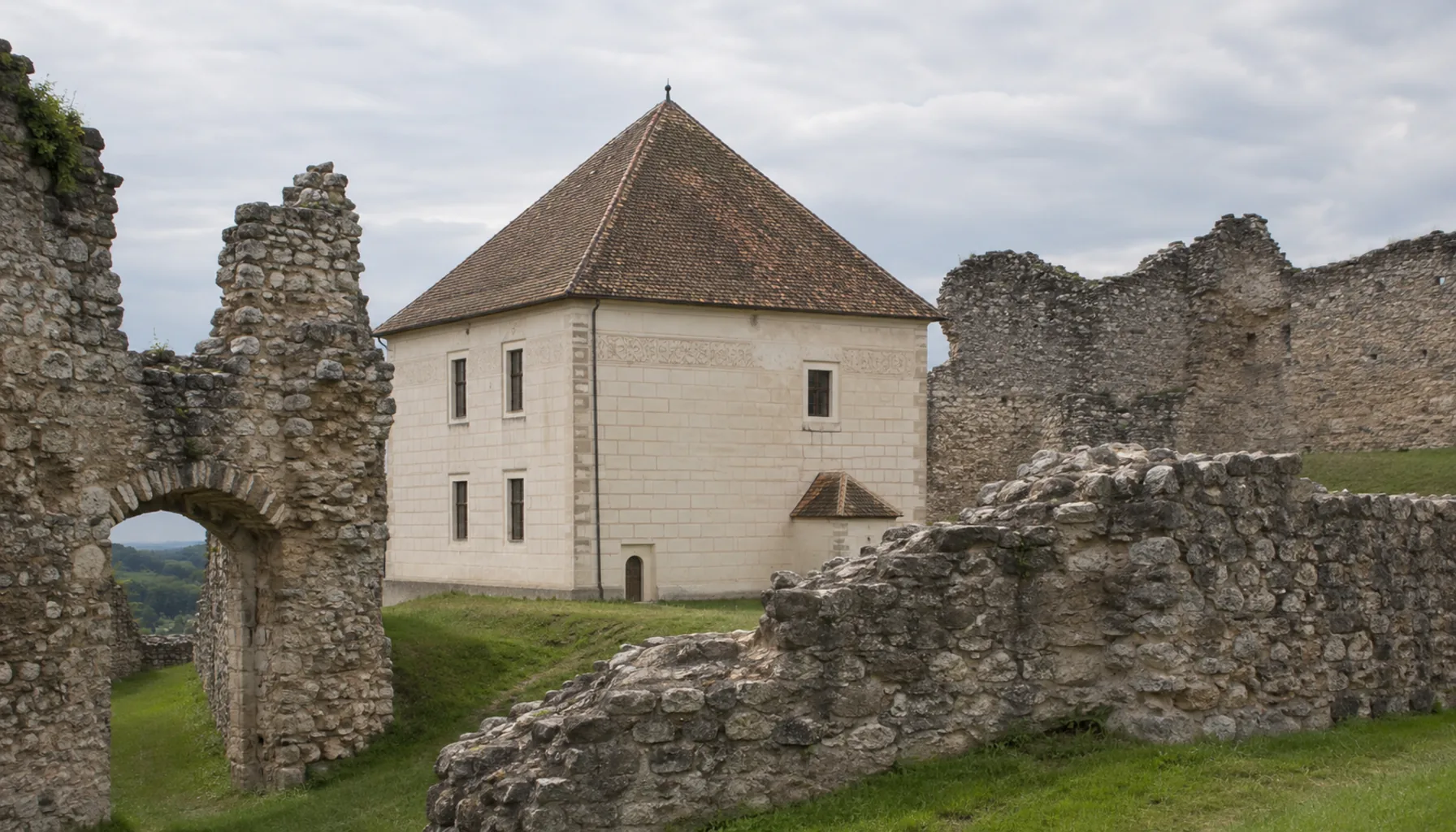
The Tekov Museum occupies the Dobó manor house inside the castle walls, with county history, archaeology and folk collections. Its name is the town's oldest surviving institution in a sense: Levice was the seat of Tekov county from 1321, when Charles Robert moved it here from Starý Tekov downstream, until 1580, and from 1735 the county was administered from Zlaté Moravce instead. The offices never came back. The museum kept the name, which is why a visitor meets a county that no longer exists before meeting the town.Tekovské múzeum sídli v Dobóovskom kaštieli vo vnútri hradných múrov a má zbierky k dejinám stolice, archeológii a ľudovej kultúre. Jeho názov je v istom zmysle najstaršou zachovanou inštitúciou mesta: Levice boli sídlom Tekovskej stolice od roku 1321, keď ju sem Karol Róbert presunul zo Starého Tekova nižšie po prúde, až do roku 1580, a od roku 1735 sa stolica spravovala zo Zlatých Moraviec. Úrady sa už nevrátili. Múzeum si meno nechalo, a preto sa návštevník skôr než s mestom stretne so stolicou, ktorá už neexistuje.
The rest is the standard Slovak set and it works: a cultural centre with a hall and a programme, a public library, amateur choirs and folk groups, and a school of art for children. We name none of them individually, because premises, ensembles and programmes change faster than a page like this does, and a wrong name is worse than no name.Zvyšok je štandardná slovenská výbava a funguje: kultúrne stredisko so sálou a programom, mestská knižnica, amatérske spevácke zbory a folklórne skupiny a základná umelecká škola pre deti. Menovite tu neuvádzame ani jednu z nich — priestory, telesá aj programy sa menia rýchlejšie než takáto stránka a nesprávne meno je horšie než žiadne.
The castle was raised in the second half of the thirteenth century on the low rock above the town, to watch the road out of the Danube plain where it reaches the hills. It belongs to the building wave that followed the Mongol invasion of 1241 rather than preceding it, which is worth remembering the next time someone tells you the Mongols destroyed it: in 1241 there was nothing here to destroy.Hrad vyrástol v druhej polovici trinásteho storočia na nízkej skale nad mestom, aby strážil cestu, ktorou sa z podunajskej roviny prichádza k horám. Patrí do stavebnej vlny, ktorá po mongolskom vpáde roku 1241 nasledovala, nie mu predchádzala — čo sa oplatí pamätať, keď vám niekto povie, že ho zničili Mongoli: v roku 1241 tu nebolo čo ničiť.
Inside the walls the Dobó family, who took over the estate after 1553, built a Renaissance manor house in the lower courtyard in 1571. That combination is the first thing anyone notices here — a broken fortress wrapped around a comfortable house — and it is the whole story of the place in one view: the defences stopped being useful, and the family went on living there anyway.Vo vnútri múrov postavili Dobóovci, ktorí panstvo prevzali po roku 1553, v roku 1571 v dolnom nádvorí renesančný kaštieľ. Práve tá kombinácia tu každého zaujme ako prvá — rozbitá pevnosť obtočená okolo pohodlného domu — a je to celý príbeh miesta v jedinom pohľade: opevnenie prestalo byť užitočné a rodina v ňom bývala ďalej.
With the castle a ruin, the town's centre of gravity moved down to the square below, and that is where the walkable heritage is: the square itself, the Piarist church and the surviving burgher houses make a short circuit. The estate passed through the hands of great families — the Koloničs, the Csákys, the Esterházys — while the real work of the place became fairs, crafts, grain and wine.Keď sa z hradu stala zrúcanina, ťažisko mesta sa presunulo dolu na námestie a práve tam sa dá pamiatková časť prejsť pešo: samotné námestie, piaristický kostol a zachované meštianske domy tvoria krátky okruh. Panstvo prechádzalo rukami veľkých rodov — Koloničovcov, Csákyovcov, Esterházyovcov — kým skutočnou prácou mesta boli jarmoky, remeslá, obilie a víno.
When the Ottomans took Ostrihom on the Danube in 1543 the frontier jumped north and Levice became a border fortress for the next hundred and twenty years. The first Turkish attack burned the town in 1544 and the castle held. On 2 November 1663 the Turks took both town and castle; on 12 June 1664 the imperial army took them back; and on 19 July General de Souches destroyed an Ottoman relief army in the fields outside the town, in a battle that cost the life of Ali Pasha on one side and of Colonel Štefan Koháry on the other.Keď Osmani v roku 1543 dobyli Ostrihom na Dunaji, hranica poskočila na sever a Levice sa na ďalších stodvadsať rokov stali pohraničnou pevnosťou. Prvý turecký útok v roku 1544 mesto vypálil, hrad odolal. 2. novembra 1663 Turci dobyli mesto aj hrad, 12. júna 1664 ich cisárske vojsko získalo späť a 19. júla generál de Souches rozdrvil na poliach pred mestom osmanské vojsko idúce na pomoc — v bitke, ktorá stála život Aliho pašu na jednej strane a plukovníka Štefana Koháryho na druhej.
So the castle came through the Ottoman wars intact, and this is where the usual story goes wrong. Its ruin began with a town fire in 1696 and was finished by the kuruc, the insurgents of Francis II Rákóczi, who held it from the early 1700s, pulled the defences down and filled the moat before marching away in 1709. They were wrecking a fortress so that the emperor's army could not use it after them. Nobody ever rebuilt it, and the ruin you walk through is the result of that decision rather than of any siege.Hrad teda prešiel osmanskými vojnami celý — a tu sa obvyklé rozprávanie mýli. Jeho zánik sa začal požiarom mesta v roku 1696 a dokončili ho kuruci, povstalci Františka II. Rákócziho, ktorí ho držali od začiatku osemnásteho storočia, strhli opevnenie a zasypali priekopu, kým v roku 1709 odtiahli. Ničili pevnosť preto, aby ju po nich nemohlo použiť cisárske vojsko. Nikto ju už neobnovil a zrúcanina, ktorou dnes prechádzate, je výsledkom tohto rozhodnutia, nie nejakého obliehania.
Sixteen videos for Culture in Levice.Šestnásť videí — Kultúra v Leviciach.