Komárno · confluence of the Váh and the DanubeKomárno · sútok Váhu a Dunaja

Culture in KomárnoKultúra v Komárne

A garrison and river town whose culture comes in layers: the largest fortress complex in Central Europe, a shipyard that worked the whole Danube basin, and a square of imitation European façades built in the 1990s.Posádkové a prístavné mesto, ktorého kultúra leží vo vrstvách: najväčší pevnostný komplex v strednej Európe, lodenica pracujúca pre celé povodie Dunaja a námestie z napodobenín európskych fasád, postavené v deväťdesiatych rokoch.

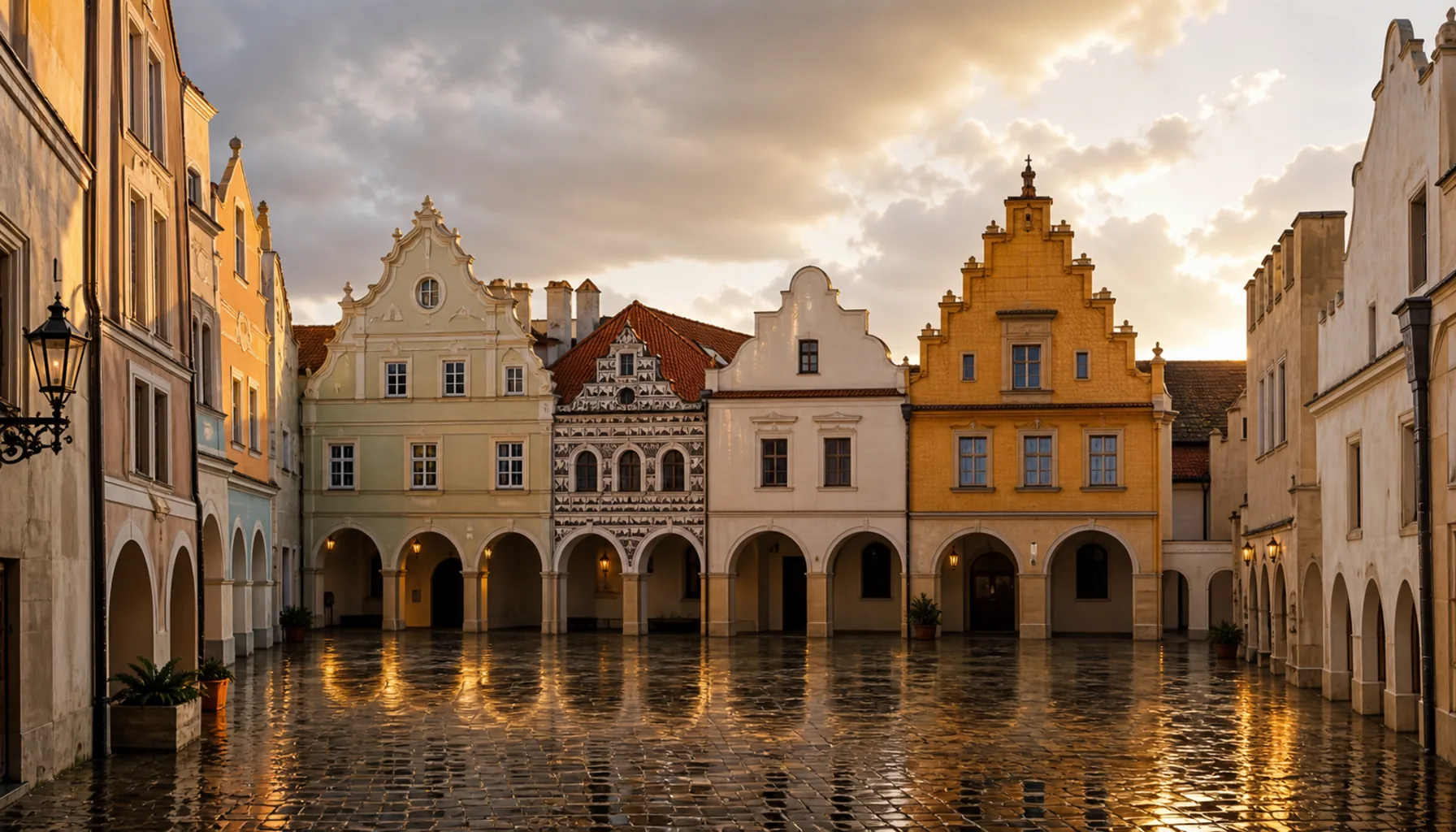
The Courtyard of Europe in Komárno, an enclosed square whose façades copy the building styles of different European countries
The Courtyard of Europe in Komárno, an enclosed square whose façades copy the building styles of different European countries.Nádvorie Európy v Komárne — uzavreté námestie, ktorého fasády napodobňujú stavebné slohy rôznych európskych krajín.

The year in KomárnoRok v Komárne

The fortress sets the season. The bastions, casemates and gates of the Old and New Fortress are visited on guided tours, and the scale only registers when you walk it. Parts of the complex stayed in military hands for most of the twentieth century and are being opened a bastion at a time, so access varies from year to year — check before you travel.Sezónu tu určuje pevnosť. Bastióny, kazematy a brány Starej a Novej pevnosti sa dajú prejsť so sprievodcom a ich rozmer si človek uvedomí, až keď ich obíde pešo. Časti komplexu boli väčšinu dvadsiateho storočia vo vojenských rukách a sprístupňujú sa po jednotlivých bastiónoch, takže prístupnosť sa rok od roka mení — overte si ju pred cestou.

The river supplies the rest. Danube cruise boats call in season, and the two halves of the town work as a pair: Komárno on the north bank and Komárom on the south were one place until 1920, joined now by the Elizabeth Bridge and, since 2020, by a second road bridge. The border check went in 2007, so a programme on one bank draws an audience from the other.Zvyšok dodáva rieka. V sezóne tu zastavujú dunajské výletné lode, a obe polovice mesta fungujú ako dvojica: Komárno na severnom brehu a Komárom na južnom boli do roku 1920 jedným mestom, dnes ich spája Alžbetin most a od roku 2020 aj druhý cestný most. Hraničná kontrola padla v roku 2007, takže program na jednom brehu priláka publikum z druhého.

Two names give the town its anniversaries: Mór Jókai, who became the most widely read novelist of his century, born here in 1825, and Franz Lehár, who wrote The Merry Widow, born here in 1870. Both are commemorated in the streets they were born on, and the town's music and literary programme leans on them. We name no festival, because such programmes change faster than a page like this does.Výročia mestu dávajú dve mená: Mór Jókai, z ktorého sa stal najčítanejší románopisec svojho storočia, narodený tu v roku 1825, a Franz Lehár, autor Veselej vdovy, narodený tu v roku 1870. Obom je venovaná pamiatka na uliciach, kde prišli na svet, a hudobný i literárny program mesta sa o ne opiera. Nijaký festival tu nemenujeme — takéto programy sa menia rýchlejšie než takáto stránka.

Where culture livesKde žije kultúra

The Danube Museum covers the river and the town, and the fortress itself is the other permanent exhibit, an object rather than a collection. Beyond them the infrastructure is the standard Slovak set: a cultural centre with a hall and a programme, a public library, amateur choirs and ensembles, and a school of art for children. We name none of them, because premises and programmes change faster than a page like this does.Podunajské múzeum sa venuje rieke aj mestu a druhou stálou expozíciou je samotná pevnosť, objekt namiesto zbierky. Okrem nich je tu štandardná slovenská výbava: kultúrne stredisko so sálou a programom, mestská knižnica, amatérske zbory a súbory a základná umelecká škola pre deti. Menovite ich tu neuvádzame, priestory aj programy sa menia rýchlejšie než takáto stránka.

The J. Selye University opened here in 2004, the year Slovakia and Hungary joined the European Union together, and it keeps a student population in a town that would otherwise be ageing — which changes what a small town can put on, and who is still in it in the evening.Univerzita J. Selyeho tu vznikla v roku 2004, keď Slovensko a Maďarsko spoločne vstúpili do Európskej únie, a udržiava v meste študentov, ktoré by inak starlo — a to mení, čo si malé mesto môže dovoliť usporiadať a kto v ňom ešte večer je.

The buildings that carry itBudovy, ktoré ju nesú

The fortress is the town's principal building in every sense. In 1546 Ferdinand I's engineers began rebuilding the medieval castle as a modern Italian bastion fort — low, thick, angled walls that cannonballs bounce off instead of knocking down — with Pietro Ferrabosco among the designers. It was tested in 1594 by an Ottoman army reported at a hundred thousand men, and held. After Nové Zámky fell in 1663 a New Fortress was begun beside it, finished in 1673 and strengthened again by 1683. It was never taken by force; the worst damage of those years came from the Danube flood of 1682.Pevnosť je hlavnou stavbou mesta v každom zmysle. V roku 1546 začali inžinieri Ferdinanda I. prestavovať stredoveký hrad na modernú bastiónovú pevnosť talianskeho typu — nízke, hrubé, zošikmené múry, od ktorých sa delové gule odrážajú namiesto toho, aby ich zrútili — a medzi projektantmi bol Pietro Ferrabosco. Skúškou prešla v roku 1594, keď ju obliehalo osmanské vojsko uvádzané v počte sto tisíc mužov, a obstála. Po páde Nových Zámkov v roku 1663 sa vedľa nej začala stavať Nová pevnosť, dokončená v roku 1673 a do roku 1683 znovu posilnená. Dobyť ju nikto nedokázal; najväčšie škody tých rokov narobila dunajská povodeň roku 1682.

What did wreck old Komárno was geology and fire. An earthquake on 28 June 1763 destroyed much of the town and a second on 22 April 1783 struck streets that had only just been rebuilt. Then in 1849 General György Klapka held the fortress against the imperial army through a siege that began on 13 July; when Hungary's main force laid down its arms on 13 August, Komárno went on fighting and part of the town burned. The garrison marched out free on 2 October 1849, the last place in the kingdom to give up. What you walk through now is largely what was built after all that.Staré Komárno zničila geológia a oheň. Zemetrasenie 28. júna 1763 zrúcalo veľkú časť mesta a druhé, 22. apríla 1783, zasiahlo ulice, ktoré boli sotva obnovené. V roku 1849 potom generál György Klapka bránil pevnosť proti cisárskej armáde v obliehaní, ktoré sa začalo 13. júla; keď hlavné uhorské vojsko 13. augusta zložilo zbrane, Komárno bojovalo ďalej a časť mesta zhorela. Posádka odišla slobodne 2. októbra 1849 ako posledná v krajine. To, čím dnes prechádzate, je zväčša tým, čo sa postavilo po tomto všetkom.

Around the main square stand the Church of St Andrew and a Serbian Orthodox church, both records of a port that traded up and down the river and took in whoever the trade brought. Beside the square is the Courtyard of Europe, an enclosed square put up at the end of the 1990s whose buildings imitate the architecture of different European nations — kitsch to some visitors, a popular civic gesture to others. Both readings are fair.Pri hlavnom námestí stoja Kostol svätého Ondreja a srbský pravoslávny chrám — svedectvá prístavu, ktorý obchodoval hore i dolu riekou a prijímal tých, koho obchod priviedol. Vedľa námestia je Nádvorie Európy, uzavreté námestie z konca deväťdesiatych rokov, ktorého budovy napodobňujú architektúru rôznych európskych národov: pre niekoho gýč, pre iného obľúbené mestské gesto. Obidva pohľady sú legitímne.

A garrison town's inheritanceDedičstvo posádkového mesta

Through the middle decades of the nineteenth century the empire turned Komárno into its central redoubt, throwing up enormous outworks on both banks — the Palatine Line to the north, the Monostor and Igmánd forts to the south — until this was the largest fortress complex in Central Europe. The town below filled with soldiers and their families, which is the direct reason it produced a composer: Lehár's father was a bandmaster in the garrison. A shipyard opened on the bank in 1898 and built river vessels for the whole Danube basin for the next hundred years.V stredných desaťročiach devätnásteho storočia si ríša z Komárna urobila ústrednú pevnosť monarchie: na oboch brehoch vyrástli obrovské predsunuté opevnenia — Palatínska línia na severe, forty Monostor a Igmánd na juhu — až tu vznikol najväčší pevnostný komplex v strednej Európe. Mesto pod nimi sa naplnilo vojakmi a ich rodinami, a práve preto z neho vzišiel skladateľ: Lehárov otec bol kapelníkom posádkovej hudby. V roku 1898 na brehu otvorili lodenicu, ktorá potom sto rokov stavala riečne plavidlá pre celé povodie Dunaja.

The fortress was put on a war footing in 1914 and 1915, its guns readied and field defences dug, and no enemy ever came within a hundred kilometres. When the war ended, the empire it existed to protect had dissolved and the largest fortress system in Central Europe was guarding a border that no longer existed. The shipyard outlived it, then lost its planned-economy market almost overnight after 1989. Komárno's culture is what a garrison and a shipyard leave behind when both go quiet: a great deal of architecture, a great deal of music, and a town still working out what to do with it.V rokoch 1914 a 1915 uviedli pevnosť do vojnového stavu, pripravili delá a vykopali poľné opevnenia — a nepriateľ sa k nej nepriblížil ani na sto kilometrov. Keď vojna skončila, ríša, ktorú mala chrániť, sa rozpadla a najväčší pevnostný systém v strednej Európe strážil hranicu, ktorá už neexistovala. Lodenica ju prežila, po roku 1989 však takmer zo dňa na deň stratila odbyt plánovaného hospodárstva. Kultúra Komárna je tým, čo po sebe posádka a lodenica nechajú, keď obe stíchnu: veľa architektúry, veľa hudby a mesto, ktoré ešte hľadá, čo si s tým počať.

← Komárno← Komárno

WatchPozrite si

Sixteen videos for Culture in Komárno.Šestnásť videí — Kultúra v Komárne.