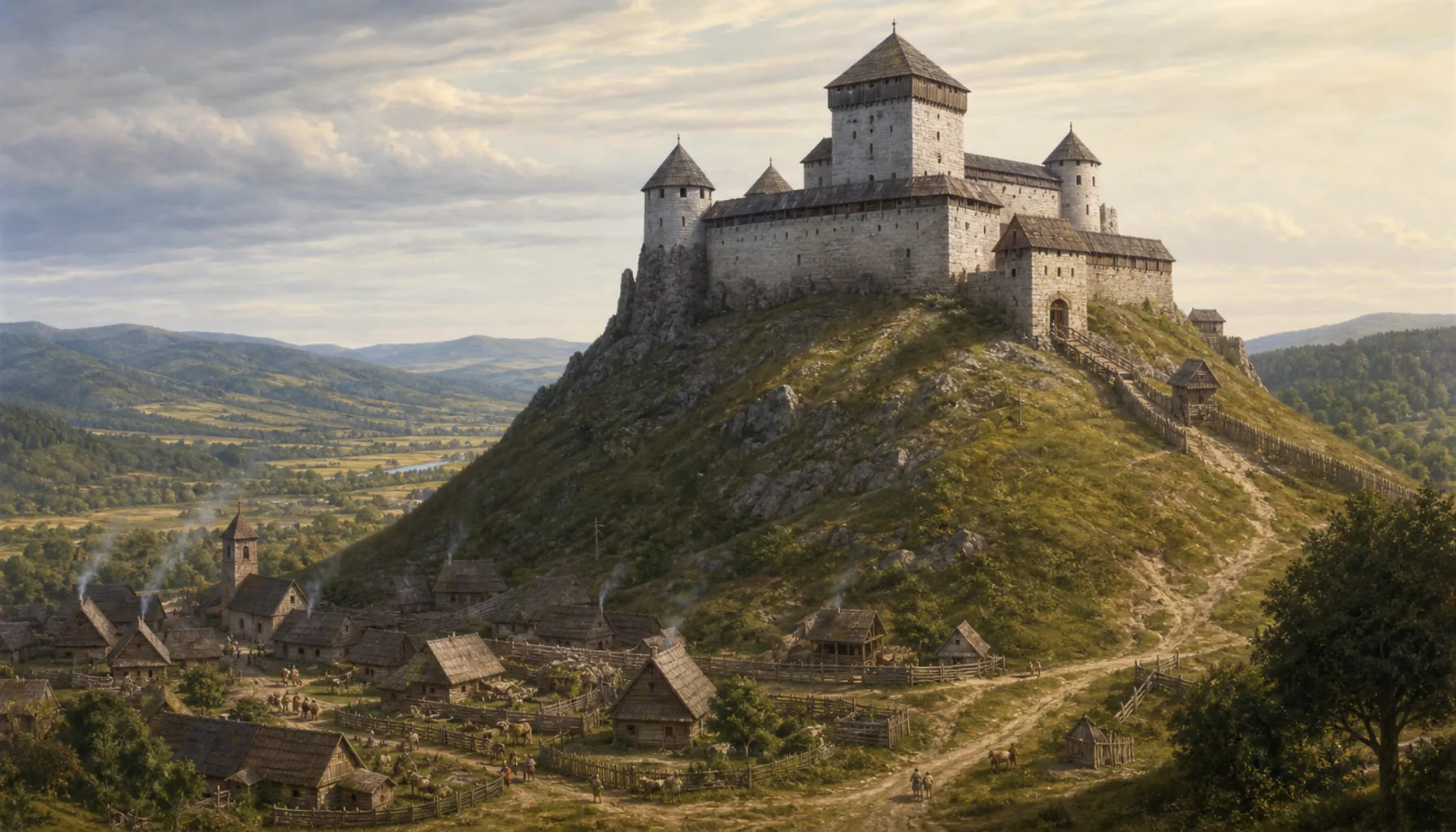
Somewhere between 1253 and 1270 Ondrej built his castle on the hill called Dúň, above the village. The oldest part is small and irregular because the rock decided the shape: an early Gothic wall closing a triangular courtyard, with a square tower at the high southern end that was both a strongpoint and somewhere to live. A second tower went up at the end of the thirteenth century and palaces were fitted in between the two. That is the castle Matúš Čák of Trenčín knew — the magnate who until his death in 1321 ruled most of what is now western Slovakia in his own name — and it stood in that form for another century and a half. Ondrej's descendants took a new surname, Forgáč, and from then on the family and the hill belonged to each other.Niekedy medzi rokmi 1253 a 1270 postavil Ondrej hrad na kopci Dúň nad dedinou. Najstaršia časť je malá a nepravidelná, lebo tvar určila skala: ranogotický múr uzatváral trojuholníkové nádvorie a na vyvýšenom južnom konci stála hranolová veža, ktorá slúžila na bývanie aj na obranu. Koncom 13. storočia pribudla druhá veža a medzi ne vstavali paláce. V tejto podobe hrad poznal Matúš Čák Trenčiansky, veľmož, ktorý až do smrti v roku 1321 vládol väčšine dnešného západného Slovenska po svojom, a takto stál ešte poldruha storočia. Ondrejovi potomkovia prijali nové priezvisko Forgáč a rod s kopcom odvtedy patrili k sebe.