1915 – 1918The state is made abroadŠtát vzniká v zahraničí
SlovakiaSlovensko
The state is made abroadŠtát vzniká v zahraničí
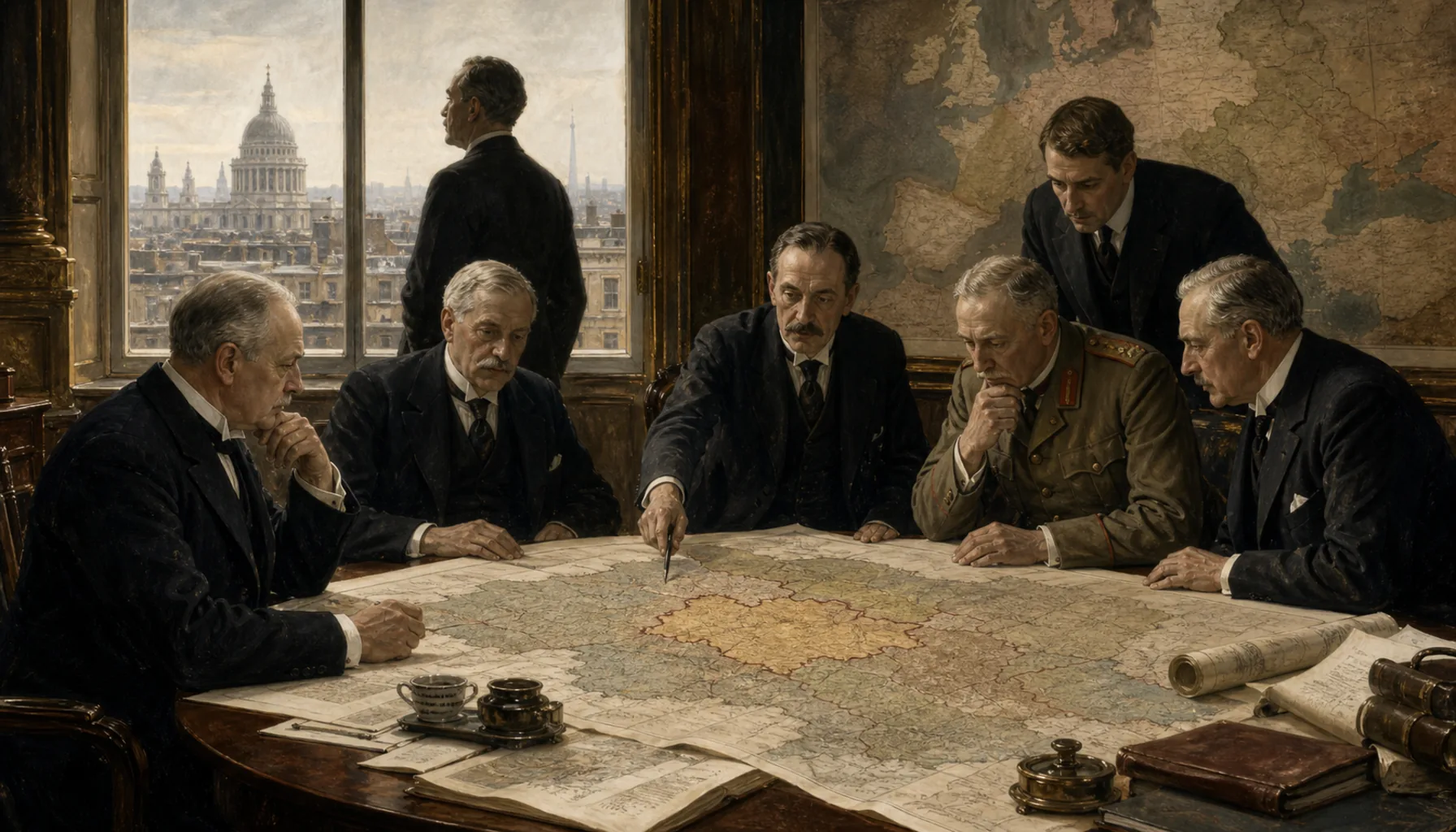
The country that replaced Austria-Hungary was designed outside it. Czech and Slovak prisoners of war and emigrants formed the Czechoslovak Legions in Russia, France and Italy and fought on the Allied side, which gave the exile leaders Tomáš Garrigue Masaryk, Edvard Beneš and the Slovak Milan Rastislav Štefánik something real to bargain with. Slovak America moved first: the Cleveland Agreement of 22 October 1915 proposed a federation with the Czechs, and the Pittsburgh Agreement, dated 30 May 1918, promised Slovakia its own administration, its own diet and courts, and Slovak as the official language. Both were signed by people who had emigrated because there was no living to be made at home, and neither was signed by anybody actually living in Slovakia. The Pittsburgh promises were never carried out, and that would matter enormously twenty years later.Štát, ktorý nahradil Rakúsko-Uhorsko, navrhli mimo neho. Z českých a slovenských zajatcov a vysťahovalcov vznikli v Rusku, vo Francúzsku a v Taliansku československé légie a bojovali na strane Dohody — exiloví politici Tomáš Garrigue Masaryk, Edvard Beneš a Slovák Milan Rastislav Štefánik tak mali pri rokovaniach čo položiť na stôl. Slovenská Amerika sa pohla prvá: Clevelandská dohoda z 22. októbra 1915 navrhla federáciu s Čechmi a Pittsburská dohoda s dátumom 30. mája 1918 sľúbila Slovensku vlastnú správu, vlastný snem a súdy a slovenčinu ako úradný jazyk. Oba dokumenty podpísali ľudia, ktorí sa vysťahovali preto, že doma sa nedalo vyžiť, a ani jeden nepodpísal nikto, kto na Slovensku naozaj žil. Pittsburské sľuby nikdy nesplnili — a o dvadsať rokov neskôr to zavážilo obrovsky.
ReferencesZdroje
Where this came fromOdkiaľ to pochádza
Sources consulted while researching this page. Follow them to read further — and to check us.Zdroje, z ktorých sme pri príprave tejto stránky vychádzali. Kliknite a čítajte ďalej — aj si nás overte.
Černová massacre — Wikipediadate, 15 killed and 12 seriously wounded, gendarmes' own nationalitydate, 15 killed and 12 seriously wounded, gendarmes' own nationality
Magyarization — Wikipediathe 1907 Apponyi education laws, the closing of the Slovak grammar schools and of Matica slovenská in April 1875the 1907 Apponyi education laws, the closing of the Slovak grammar schools and of Matica slovenská in April 1875
Žiadosti slovenského národa — Wikipédia10 May 1848, fourteen points, the arrest warrants of May–June 184810 May 1848, fourteen points, the arrest warrants of May–June 1848
Slovak Uprising of 1848–49 — Wikipediathe three volunteer campaigns and the disbanding of the corps on 21 November 1849the three volunteer campaigns and the disbanding of the corps on 21 November 1849
Pittsburgh Agreement — Wikipediathe Cleveland Agreement of 22 October 1915 and the text of the Pittsburgh promisesthe Cleveland Agreement of 22 October 1915 and the text of the Pittsburgh promises
Slovak–Hungarian War — Wikipediathe 'Little War' of March 1939 and the 1,697 km² ceded on 4 April 1939the 'Little War' of March 1939 and the 1,697 km² ceded on 4 April 1939
Slovak National Uprising — Wikipediainsurgent numbers, territory held, the fall of Banská Bystrica on 27 October 1944insurgent numbers, territory held, the fall of Banská Bystrica on 27 October 1944
Kremnička and Nemecká massacres — Wikipedia747 victims at Kremnička, about 900 at Nemecká, the units responsible747 victims at Kremnička, about 900 at Nemecká, the units responsible
Masaker v Kľakovskej doline — Wikipédia21 January 1945, 148 civilians including 48 children under eighteen21 January 1945, 148 civilians including 48 children under eighteen
Battle of the Dukla Pass — Wikipedia8 September – 28 October 1944 and the casualty figures8 September – 28 October 1944 and the casualty figures
Kalinov — Wikipédiathe first village in Slovakia liberated, 21 September 1944the first village in Slovakia liberated, 21 September 1944
Slovak Greek Catholic Church — Wikipediathe staged Prešov assembly of April 1950, Bishop Gojdič, the 1968 restorationthe staged Prešov assembly of April 1950, Bishop Gojdič, the 1968 restoration