Banská Bystrica region · VillagesBanskobystrický kraj · Obce
PonikyPoniky
One of the finest cycles of Gothic wall painting in Slovakia covers the inside of this village's parish church, dated 1415 and hidden for centuries under limewash. Poniky kept a costume and a lace tradition alongside it.Vnútro farského kostola tejto obce pokrýva jeden z najkrajších cyklov gotických nástenných malieb na Slovensku, datovaný rokom 1415 a po stáročia ukrytý pod vápnom. Poniky si popri ňom zachovali kroj aj čipkársku tradíciu.
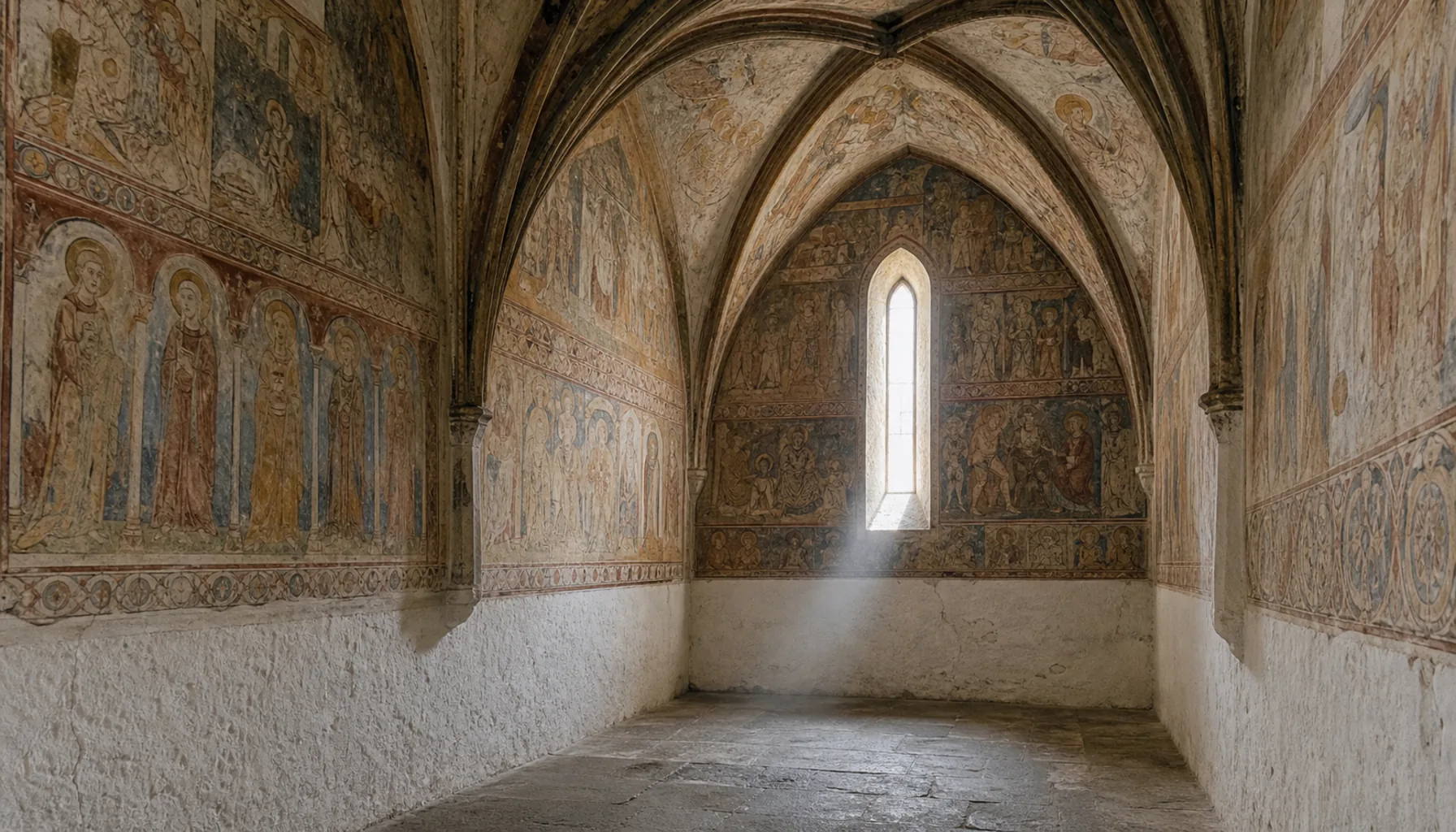
Gothic wall painting of 1415 in the sanctuary of the parish church at PonikyGotická nástenná maľba z roku 1415 vo svätyni farského kostola v Ponikách
Where it standsKde leží
Poniky lie in the hills south-east of Banská Bystrica, where the Zvolen basin gives way to the long approach to Poľana, the largest extinct volcano in the country. The village runs along its brook in three parts — Poniky itself, Ponická Lehôtka and Ponická Huta — with oak and beech woods and pasture on the slopes above.Poniky ležia v kopcoch juhovýchodne od Banskej Bystrice, tam, kde Zvolenská kotlina prechádza do dlhého nábehu na Poľanu, najväčšiu vyhasnutú sopku v krajine. Obec sa tiahne pozdĺž svojho potoka v troch častiach — samotné Poniky, Ponická Lehôtka a Ponická Huta — a na svahoch nad ňou sú dubové a bukové lesy a pasienky.
Why it is herePrečo práve tu
This was estate and forest country of Zvolen county, farmed and grazed rather than mined — though the name of Ponická Huta remembers a smelting works, a huta, that once used the ore and the charcoal of these hills. The village is medieval, and the church that carries its reputation was standing well before the paintings were put on its walls.Bola to panská a lesnatá krajina Zvolenskej stolice, kde sa skôr hospodárilo a pásol dobytok, než dolovalo — hoci meno Ponickej Huty pripomína hutu, ktorá kedysi spracúvala rudu a drevené uhlie z týchto kopcov. Obec je stredoveká a kostol, ktorý jej robí meno, tu stál dávno predtým, než na jeho steny prišli maľby.
In 1415 a painter — or a workshop; the attribution is argued over — covered the sanctuary and part of the nave with a scheme of scenes and figures. The Poniky paintings are among the most ambitious and best-preserved Gothic wall paintings in Slovakia, and they belong to a much wider central European practice of painting a village church wall to wall, of which only fragments survive elsewhere.V roku 1415 pokryl maliar — alebo dielňa; autorstvo je predmetom sporu — svätyňu a časť lode výjavmi a postavami. Ponické maľby patria k najnáročnejším a najlepšie zachovaným gotickým nástenným maľbám na Slovensku a hlásia sa k oveľa širšej stredoeurópskej praxi vymaľovať dedinský kostol od steny po stenu, z ktorej sa inde zachovali len zlomky.
They survived by being covered. Later centuries limewashed the interior over, and it was restoration work that brought the fifteenth-century surface back — the usual history of medieval painting in this region, where what stayed visible is generally what did not last.Zachovali sa tým, že ich zakryli. Neskoršie storočia interiér prebielili vápnom a povrch z 15. storočia vrátil až reštaurátorský výskum — obvyklý osud stredovekej maľby v tomto kraji, kde to, čo zostalo na očiach, spravidla nevydržalo.
What you actually seeČo naozaj uvidíte
The church is small and the outside gives nothing away: a plain Gothic body with a steep roof. The paintings are the whole of it. They run over the sanctuary vault and walls in bands, in the courtly manner of the years around 1400 — saints, scenes from the life of Christ, ranks of figures under painted architecture — in colour that has come through better than most surviving work of the period.Kostol je malý a zvonka neprezradí nič: jednoduchá gotická stavba so strmou strechou. Maľby sú tu všetkým. Prebiehajú po klenbe a stenách svätyne v pásoch, v dvorskom slohu rokov okolo 1400 — svätci, výjavy zo života Krista, rady postáv pod maľovanou architektúrou — vo farbe, ktorá prežila lepšie než väčšina zachovaných diel tej doby.
The scale is domestic and the detail repays standing still: faces, patterned textiles, the borders between one scene and the next. Ask for light. The windows are small, the interior is dim, and a good deal of the value sits in surface that a phone torch will not reach.Mierka je domácka a detail sa odmení tomu, kto zastane: tváre, vzorované látky, orámovania medzi jedným výjavom a druhým. Vypýtajte si svetlo. Okná sú malé, vnútro šeré a veľká časť hodnoty je v povrchu, na ktorý baterka v telefóne nedosiahne.
The rest of the village is unshowy — houses along the brook, the two outlying parts further up the valley, and pasture and oak wood beginning at the last garden fence, with Poľana filling the sky to the east.Zvyšok obce sa nepredvádza — domy pozdĺž potoka, dve odľahlejšie časti vyššie v doline a pasienky s dubinami začínajúce hneď za posledným plotom, pričom na východe vypĺňa oblohu Poľana.
Living village, not a museumŽivá obec, nie skanzen
The church is in ordinary parish use and is not staffed as a monument. It is normally locked; access is arranged through the parish or the village office, and a visit means finding the person with the key rather than buying a ticket. Do not plan a journey around getting inside without settling that first.Kostol je v bežnom farskom užívaní a nemá personál ako pamiatka. Býva zamknutý; vstup sa dohaduje cez faru alebo obecný úrad a návšteva znamená nájsť človeka s kľúčom, nie kúpiť si vstupenku. Neplánujte cestu okolo toho, že sa dostanete dnu, kým to nemáte dohodnuté.
The costume and the lace are the same story. They are kept up by people in the village for the village's own occasions — a feast day, a wedding, a funeral — and appear in that context rather than being staged for visitors. If you see them, it will be because something is happening, not because it is scheduled for you.S krojom a čipkou je to rovnaké. Udržiavajú ich ľudia z obce pre vlastné príležitosti — sviatok, svadbu, pohreb — a objavia sa v tejto súvislosti, nie inscenované pre návštevníkov. Ak ich uvidíte, bude to preto, že sa niečo deje, nie preto, že to má niekto pre vás v programe.
Getting thereAko sa tam dostať
Buses run out from Banská Bystrica, which is also the nearest railway station, on the road south-east into the hills; the journey takes well under an hour. The Gothic church at neighbouring Čerín and the villages under Poľana make an obvious continuation by car.Autobusy sem premávajú z Banskej Bystrice, kde je aj najbližšia železničná stanica, po ceste smerujúcej na juhovýchod do kopcov; cesta trvá výrazne menej než hodinu. Gotický kostol v susednom Čeríne a obce pod Poľanou sú samozrejmým pokračovaním pre tých, čo prišli autom.
Explore PonikyObjavujte Poniky
Every part of this place with a page of its own.Každá časť tohto miesta, ktorá má vlastnú stránku.