Ten Minutes Uphill Into a Copper TownDesať minút do kopca a ste v medenom meste
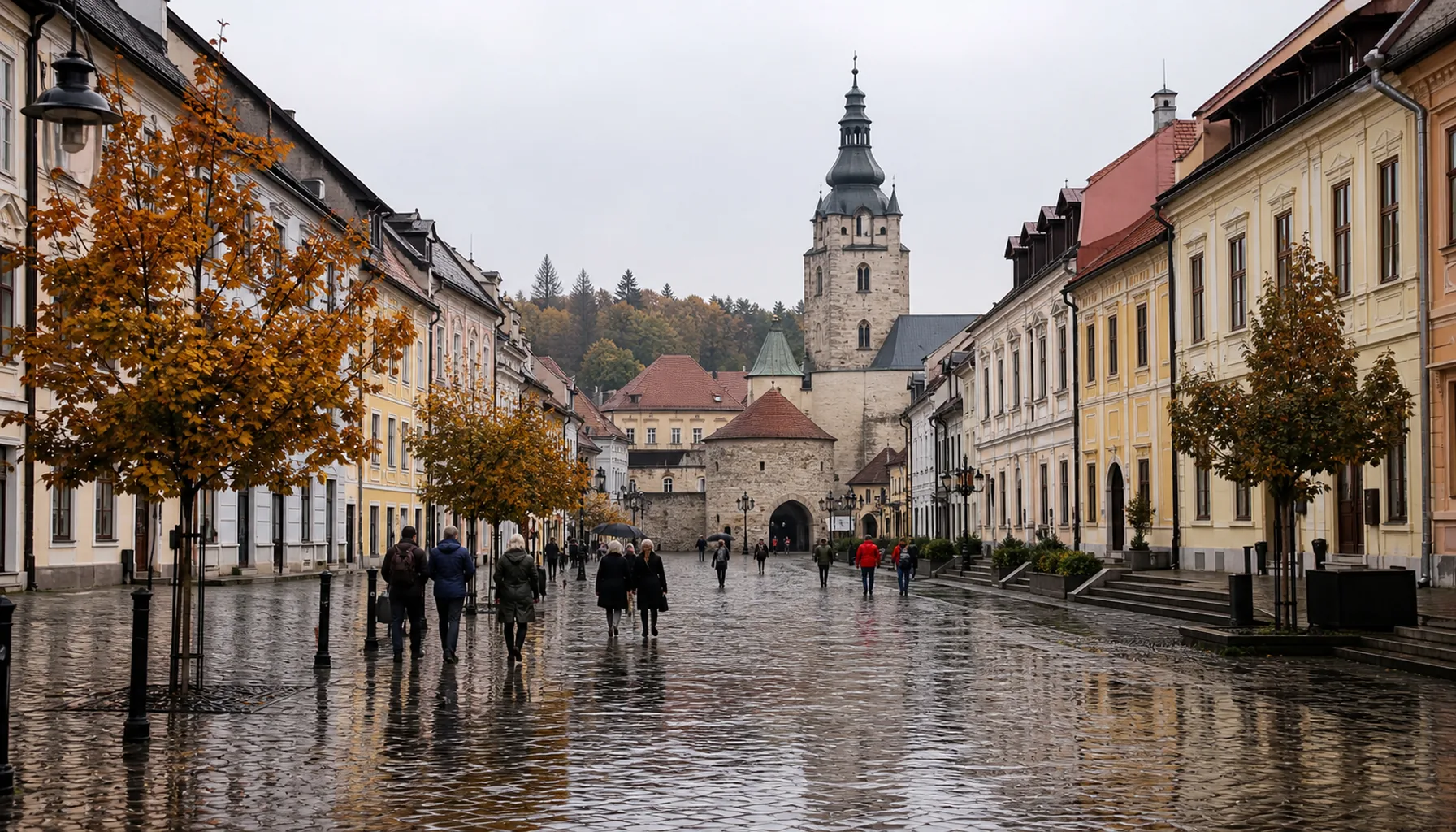
Banská Bystrica was one of the great medieval copper-mining towns of the Kingdom of Hungary. In the late fifteenth and sixteenth centuries the Thurzo–Fugger copper company ran its trade from here — local ore, Augsburg money, and a market that reached across Europe — and the wealth that came back went straight into the houses on the square. That is why a mid-sized Central Slovak city has a square out of all proportion to it, and why the ten-to-fifteen-minute walk up from Terminal is the single best thing you can do with a spare hour in this town.Banská Bystrica bola jedným z veľkých stredovekých medených banských miest Uhorského kráľovstva. Koncom pätnásteho a v šestnástom storočí odtiaľto riadila svoj obchod thurzovsko-fuggerovská mediarska spoločnosť — domáca ruda, augsburské peniaze a trh siahajúci naprieč Európou — a bohatstvo, ktoré sa vracalo, išlo rovno do domov na námestí. Preto má stredne veľké stredoslovenské mesto námestie, ktoré jeho veľkosti vôbec nezodpovedá, a preto je desať- až pätnásťminútová prechádzka hore od Terminalu to najlepšie, čo sa dá s voľnou hodinou v tomto meste podniknúť.
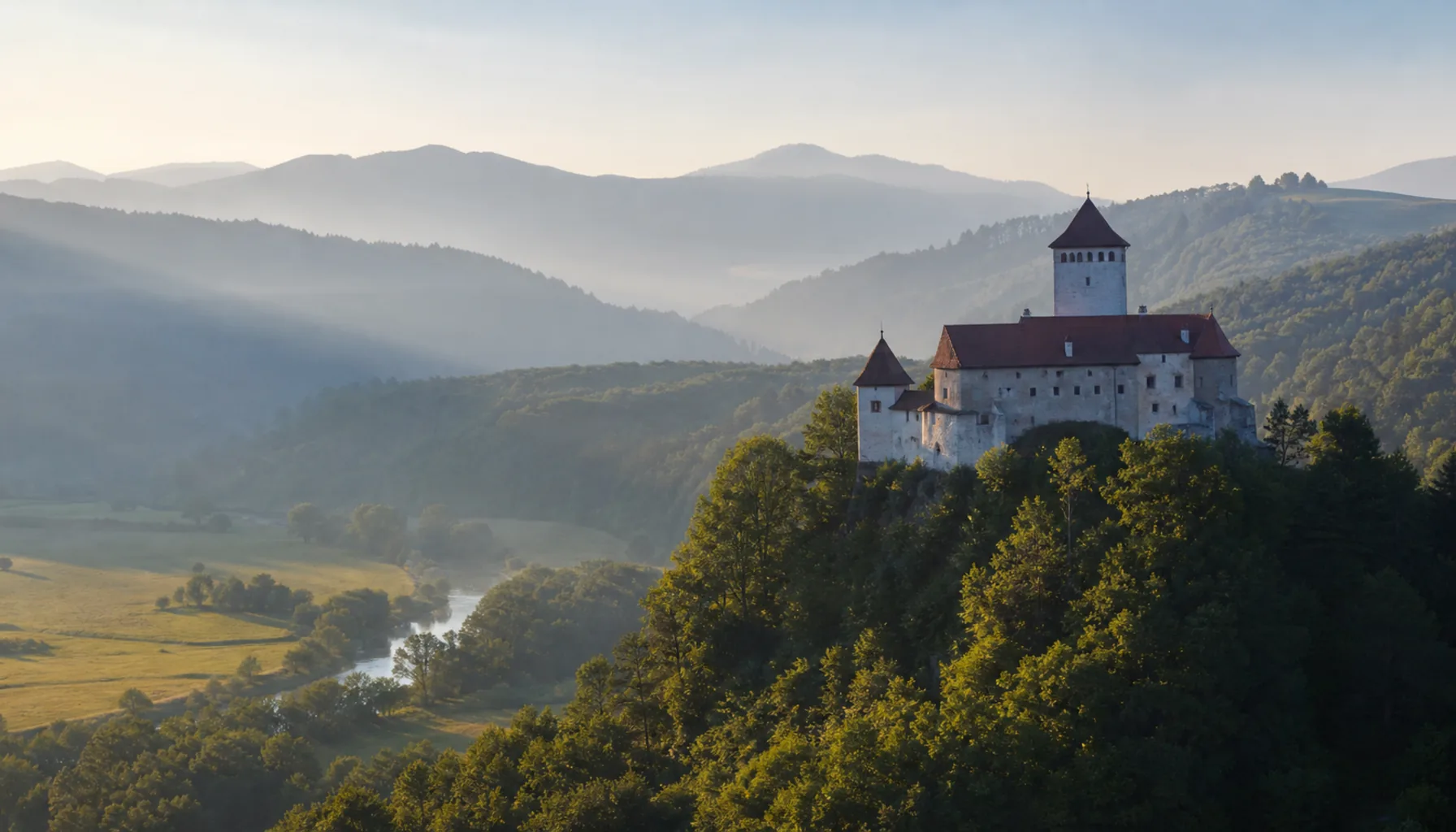
And because this particular building is a transport hub, the region opens out from its doors. The Hron valley runs east from the city towards the Low Tatras, past the castle at Slovenská Ľupča; the old mining country runs south towards Zvolen and on to Banská Štiavnica. You will see none of it from the shop floor. You will see the buses that go there, drawn up one level down.A pretože práve táto budova je dopravným uzlom, kraj sa od jej dverí otvára doširoka. Pohronie vedie z mesta na východ k Nízkym Tatrám, popod hrad v Slovenskej Ľupči; stará banská krajina sa tiahne na juh do Zvolena a ďalej do Banskej Štiavnice. Z obchodného podlažia z toho neuvidíte nič. Uvidíte autobusy, ktoré tam idú, zaparkované o poschodie nižšie.
Námestie SNP and the old townNámestie SNP a staré mesto
A long square sloping gently uphill, lined on both sides with pastel burgher houses, and standing free in the middle of it the thing everyone photographs: a stone clock tower that visibly leans. A baroque plague column stands nearby, and the Thurzo House — the copper company's own building — is now the Central Slovak Museum. At the head of the square the ground rises into the fortified church precinct: the barbican, the Church of the Assumption and the Matej House, which together are the surviving core of the town castle.Dlhé námestie mierne stúpajúce do kopca, po oboch stranách lemované pastelovými meštianskymi domami, a uprostred voľne stojí to, čo fotografuje každý: kamenná hodinová veža, ktorá je viditeľne naklonená. Neďaleko stojí barokový morový stĺp a Thurzov dom — vlastná budova mediarskej spoločnosti — je dnes Stredoslovenským múzeom. Na hornom konci námestia sa terén dvíha do opevneného kostolného areálu: barbakan, Kostol Nanebovzatia Panny Márie a Matejov dom sú spolu zachovaným jadrom mestského hradu.
The Museum of the Slovak National UprisingMúzeum Slovenského národného povstania
Banská Bystrica was the centre of the Slovak National Uprising of 1944, and the museum built to remember it is one of the most striking pieces of modern architecture in the country: two curved concrete shells leaning apart from one another, with a paved way running between them and the sky showing in the gap. It was designed by Dušan Kuzma and opened at the end of the 1960s. Even if you get no further than the outside of it, walk between the shells.Banská Bystrica bola centrom Slovenského národného povstania v roku 1944 a múzeum postavené na jeho pamiatku patrí k najsilnejším dielam modernej architektúry v krajine: dve zakrivené betónové škrupiny naklonené od seba, medzi nimi dláždená cesta a v medzere presvitá obloha. Navrhol ho Dušan Kuzma a otvorili ho koncom šesťdesiatych rokov. Aj keby ste sa nedostali ďalej než k jeho vonkajšku, prejdite sa pomedzi škrupiny.
Slovenská Ľupča castleHrad Slovenská Ľupča
East out of the city the Hron valley narrows and the road runs beneath a castle set on a rise above the river. It is the obvious short excursion from Banská Bystrica, and it points the way the buses go — up the Hron and on towards the Low Tatras. Going that way rather than south is the difference between mining country and mountain country, and both start at the same bus deck.Na východ od mesta sa údolie Hrona zužuje a cesta vedie popod hrad posadený na vyvýšenine nad riekou. Je to samozrejmý krátky výlet z Banskej Bystrice a ukazuje smer, ktorým idú autobusy — hore Pohroním a ďalej k Nízkym Tatrám. Vybrať sa týmto smerom namiesto na juh je rozdiel medzi banskou a horskou krajinou — a oboje sa začína na tej istej autobusovej ploche.