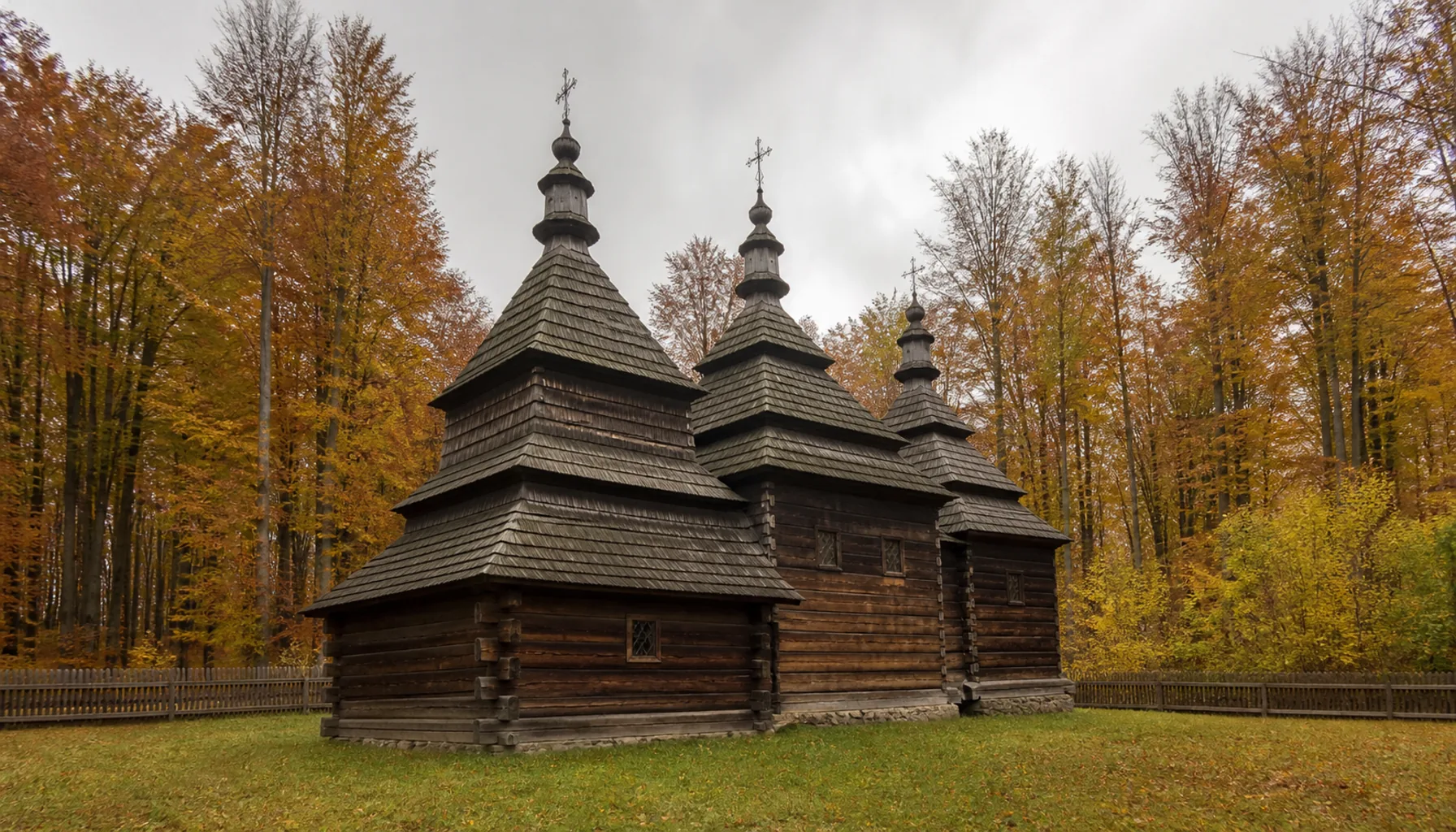
Log walls, shingle roofs and joints cut without a nail — and eight churches on the UNESCO list that exist in that form because of what their builders were forbidden to do.Zrubové steny, šindľové strechy a spoje tesané bez klinca — a osem kostolov v zozname UNESCO, ktoré majú túto podobu kvôli tomu, čo ich stavitelia nesmeli.
Log walls and a shingled roof of a wooden churchZrubové steny a šindľová strecha dreveného kostola
How a log house is madeAko sa robí zrub
Above the lowland, everything was built of spruce and fir because everything was surrounded by it. The technique is horizontal log construction: squared trunks laid one on another and locked at the corners with cut joints, the gaps packed with moss and clay, the whole thing standing on a stone footing to keep it out of the wet.Nad nížinou sa stavalo zo smreka a jedle, lebo všetko bolo nimi obklopené. Technikou je vodorovný zrub: otesané kmene ukladané na seba a v rohoch zaviazané tesanými spojmi, škáry vypchané machom a hlinou a celok postavený na kamennú podmurovku, aby nestál vo vlhku.
Roofs are steep and shingled, because a shallow roof holds snow and a shingle can be replaced one at a time by the man who lives under it. Where a village could afford it, the gable was decorated; where it could afford more, the walls were limewashed in patterns, which is what makes Čičmany look the way it does.Strechy sú strmé a šindľové, lebo plochá strecha drží sneh a šindeľ sa dá vymieňať po jednom rukami toho, kto pod ním býva. Kde na to obec mala, zdobil sa štít; kde mala viac, maľovali sa steny vápnom do vzorov — a práve preto vyzerajú Čičmany tak, ako vyzerajú.
Three kinds of wooden churchTri druhy dreveného kostola
The wooden churches divide into three traditions. The Roman Catholic ones are the oldest, medieval in origin — Hervartov and Tvrdošín are the survivors on the UNESCO list. The Greek Catholic ones of the north-east are three-part and three-towered, rising in stages from entrance to sanctuary, with a painted iconostasis across the width of the interior: Bodružal, Ladomirová and Ruská Bystrá are the listed ones, and there are dozens more.Drevené kostoly sa delia na tri tradície. Rímskokatolícke sú najstaršie, so stredovekým pôvodom — na zozname UNESCO ich zastupujú Hervartov a Tvrdošín. Gréckokatolícke na severovýchode sú trojdielne a trojvežové, stúpajúce v stupňoch od vstupu k svätyni, s maľovaným ikonostasom cez celú šírku interiéru: zapísané sú Bodružal, Ladomirová a Ruská Bystrá a ďalších sú desiatky.
The Protestant articular churches are the strangest and the most political. After 1681 Lutheran congregations were permitted a church only under restrictions — traditionally described as: built of wood, outside the town, no tower, the door not facing the main road, and up within a year. The builders answered by putting everything inside: Kežmarok, Leštiny and Hronsek look modest from the lane and seat many hundreds within.Evanjelické artikulárne kostoly sú najzvláštnejšie a najpolitickejšie. Po roku 1681 smeli luteránske zbory postaviť kostol len za podmienok, ktoré sa tradične opisujú takto: z dreva, mimo mesta, bez veže, so vstupom nie od hlavnej cesty a hotový do roka. Stavitelia odpovedali tým, že všetko dali dovnútra: Kežmarok, Leštiny a Hronsek vyzerajú z uličky skromne a vnútri posadia mnoho stoviek ľudí.
Villages, and JurkovičDediny a Jurkovič
The village form survives whole in a handful of places — Vlkolínec, Podbiel's Bobrova raľa, Ždiar, Osturňa, Čičmany — and in fragments almost everywhere north of the lowland: a barn, a well-house, a bell tower on a village green.Podoba dediny sa vcelku zachovala na hŕstke miest — Vlkolínec, Bobrova raľa v Podbieli, Ždiar, Osturňa, Čičmany — a v zlomkoch takmer všade severne od nížiny: stodola, studňa, zvonica na návsí.
Dušan Jurkovič is what happens when an architect studies all of that and then designs with it. His spa buildings, his House of Culture at Skalica and his military cemeteries take the carpentry vocabulary of the mountain village into buildings that were never village buildings, and it is the closest thing Slovakia has to a national style.Dušan Jurkovič je to, čo vznikne, keď architekt toto všetko naštuduje a potom s tým navrhuje. Jeho kúpeľné stavby, Dom kultúry v Skalici a vojenské cintoríny prenášajú tesársky slovník horskej dediny do budov, ktoré dedinskými nikdy neboli — a je to najbližšie k národnému slohu, čo Slovensko má.