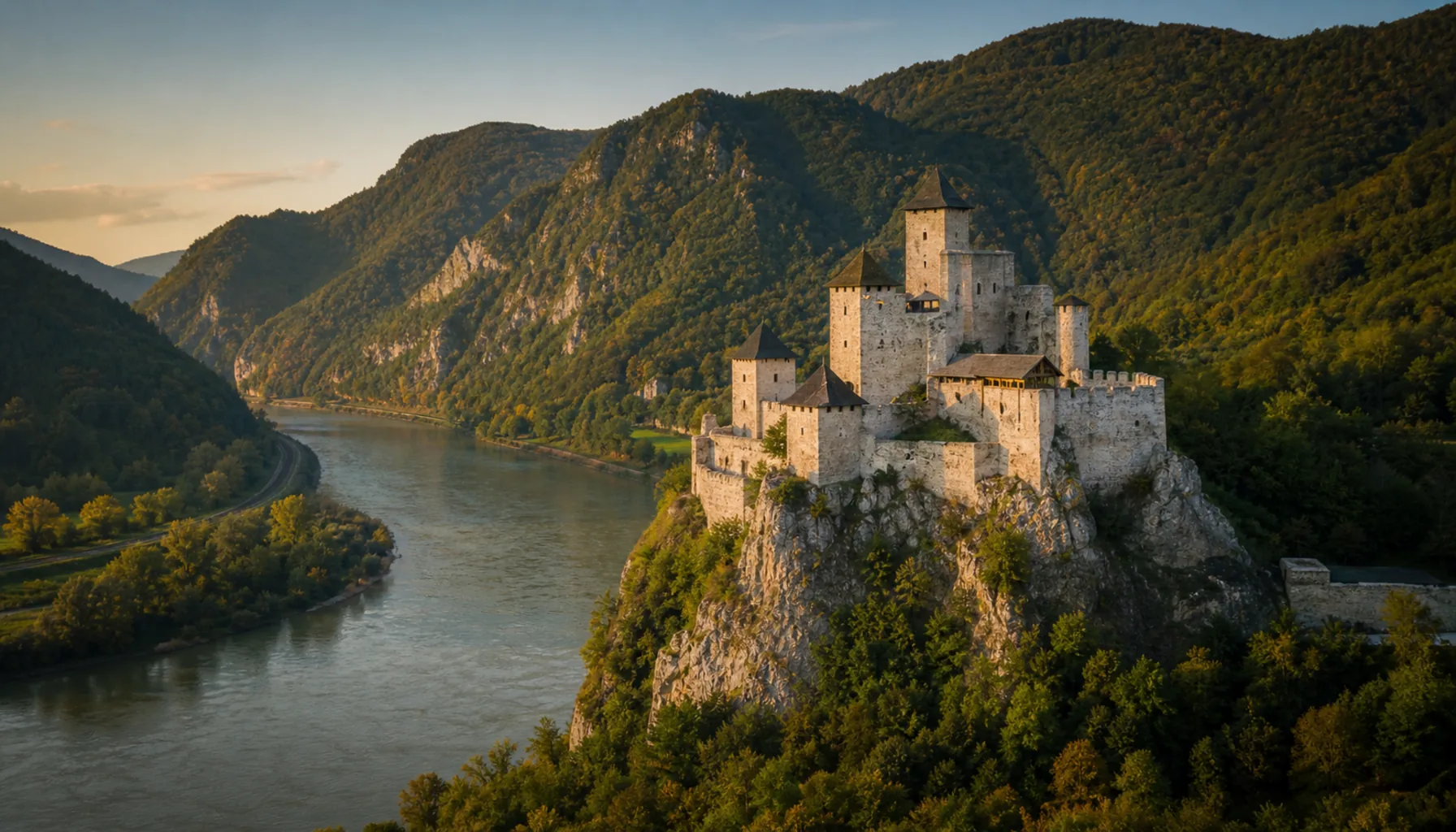
Guarding the GorgeStráž nad tiesňavou
Everything that moved between the upper Váh and the lowlands had to come through here. The river squeezes between the Malá Fatra and the Lúčanská ridge into a defile barely wide enough for the water and a track beside it, and a castle placed on the rock above that defile controls a whole region’s traffic. Strečno is recorded from the fourteenth century, and its purpose was never subtle: it was a toll station, collecting from goods on the road and from the timber that came down the water.Všetko, čo sa pohybovalo medzi horným Považím a nížinou, muselo prejsť tadiaľto. Rieka sa vtesnáva medzi Malú Fatru a Lúčanský hrebeň do úžiny sotva dosť širokej pre vodu a cestičku vedľa nej — a hrad postavený na skale nad takou úžinou ovláda dopravu celého kraja. Strečno je doložené od štrnásteho storočia a jeho účel nikdy nebol jemný: bola to mýtna stanica, ktorá vyberala poplatky z tovaru na ceste aj z dreva plaveného po vode.
Through the following centuries it was held by the crown and by a succession of noble families, enlarged and refortified as artillery improved, and drawn into the long seventeenth-century struggles between the Habsburgs and the Hungarian estates. Its best-remembered residents belong to that period: Ferenc Wesselényi, later palatine of Hungary, and his first wife Žofia Bosniaková, whose memory has outlasted his by some distance.V ďalších storočiach ho držala koruna aj rad šľachtických rodov, rozširovalo sa a znovu opevňovalo, ako sa zlepšovalo delostrelectvo, a bolo vtiahnuté do dlhých bojov sedemnásteho storočia medzi Habsburgovcami a uhorskými stavmi. Z tohto obdobia pochádzajú aj jeho najzapamätanejší obyvatelia: František Vešeléni, neskorší uhorský palatín, a jeho prvá manželka Žofia Bosniaková, ktorej pamiatka prežila tú jeho o poriadny kus.
The castle did not fall to a siege. At the end of the seventeenth century it was deliberately pulled down on imperial orders, part of a policy of demolishing fortresses that could shelter rebels — the same fate that emptied dozens of Hungarian castles in those decades. Strečno then stood as a ruin for close to three hundred years. Reconstruction began in the 1970s, ran for two decades, and the castle was opened to visitors again in the 1990s.Hrad nepadol pri obliehaní. Na konci sedemnásteho storočia ho zámerne zbúrali na cisársky rozkaz v rámci politiky ničenia pevností, ktoré mohli poskytnúť útočisko povstalcom — rovnaký osud vyprázdnil v tých desaťročiach desiatky uhorských hradov. Strečno potom stálo v ruinách takmer tristo rokov. Obnova sa začala v sedemdesiatych rokoch, trvala dve desaťročia a hrad znovu sprístupnili návštevníkom v deväťdesiatych rokoch.