The Tatra chamois and the Tatra marmot live nowhere else on earth, and both came within a few hundred animals of disappearing.Tatranský kamzík a tatranský svišť nežijú nikde inde na svete a obom chýbalo niekoľko stoviek jedincov k tomu, aby zmizli.
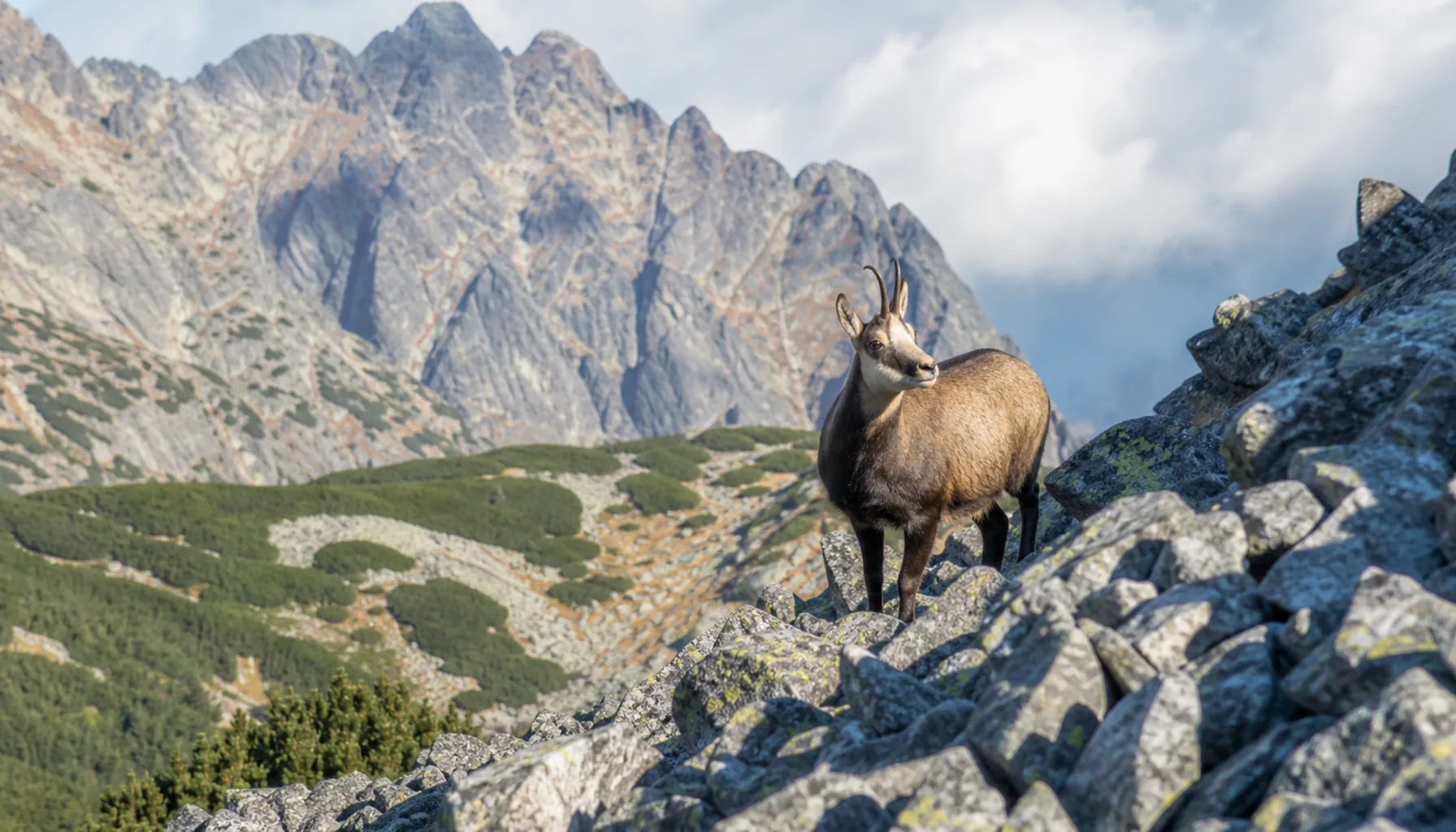
A Tatra chamois on a scree slope above the tree lineTatranský kamzík na sutinovom svahe nad hranicou lesa
The Tatra chamoisTatranský kamzík
The Tatra chamois is a distinct subspecies, isolated in the Tatras since the last ice age and found in this range and nowhere else. It lives above the tree line on the steep ground where it can outclimb anything following it, and it is the animal most visitors to the High Tatras actually see — grey-brown in summer, almost black in winter, usually spotted as movement on a scree slope.Kamzík vrchovský tatranský je samostatný poddruh, izolovaný v Tatrách od poslednej doby ľadovej a nežijúci nikde inde. Zdržiava sa nad hranicou lesa v strmom teréne, kde predbehne v šplhaní čokoľvek, čo ho sleduje, a je zvieraťom, ktoré väčšina návštevníkov Vysokých Tatier skutočne uvidí — v lete sivohnedý, v zime takmer čierny, spravidla zbadaný ako pohyb na sutinovom svahu.
It nearly went. Counts in the difficult years fell to a few hundred animals across the whole range, driven down by poaching and disturbance. Strict protection, the seasonal closure of the high trails and a great deal of ranger work brought the population back, and a separate group has been established in the Low Tatras.Takmer zanikol. Sčítania v ťažkých rokoch klesli na niekoľko stoviek jedincov v celom pohorí, čo spôsobili pytliactvo a rušenie. Prísna ochrana, sezónna uzávera vysokohorských chodníkov a veľa práce strážcov populáciu vrátili a samostatná skupina vznikla aj v Nízkych Tatrách.
The marmot, and why the trails closeSvišť a prečo sa chodníky zatvárajú
The Tatra marmot is the other endemic: a heavy ground squirrel of the alpine zone that lives in family colonies in burrow systems among the boulders, hibernates for more than half the year, and gives a piercing whistle when it sees you. You will hear it before you see it.Druhým endemitom je svišť vrchovský tatranský: ťažký hlodavec alpínskeho pásma, ktorý žije v rodinných kolóniách v systémoch nôr medzi balvanmi, viac než polovicu roka prespí a keď vás uvidí, prenikavo zapíska. Skôr ho počujete, než uvidíte.
Both animals are why the seasonal closure of the high Tatra trails from 1 November to 15 June exists, and why staying on the marked path in summer is not a formality: an animal driven off its feeding ground repeatedly in a short alpine summer does not put on the fat it needs for winter.Práve kvôli obom platí sezónna uzávera vysokohorských tatranských chodníkov od 1. novembra do 15. júna — a preto nie je zotrvanie na značenom chodníku v lete iba formalitou: zviera, ktoré počas krátkeho alpínskeho leta opakovane vyplašia z pastvy, si nenaberie tuk, ktorý potrebuje na zimu.
Deer, eagles and bisonJelene, orly a zubry
Lower down, the mountain forests hold red deer, roe deer and wild boar in large numbers, and the autumn rut in the Low Tatras and Poľana is loud enough to be a reason to go. Golden eagles nest in the high ranges, and in the old forests the capercaillie survives in numbers that fall with every clear-fell.Nižšie žije v horských lesoch množstvo jeleňov, srncov a diviakov a jesenná ruja v Nízkych Tatrách a na Poľane je taká hlasná, že sama osebe je dôvodom vybrať sa tam. Vo vysokých pohoriach hniezdi orol skalný a v starých lesoch prežíva hlucháň hôrny v počtoch, ktoré klesajú s každým holorubom.
European bison were reintroduced and can be seen in the enclosure at Topoľčianky and, free-ranging, in the far eastern forests of the Poloniny.Zubry boli vrátené do prírody a vidieť ich v obore v Topoľčiankach a voľne v lesoch Polonín na ďalekom východe.