The Town Under the RockMesto pod bralom
Everything in Trenčín happens in sight of the castle. The old town is a single graceful sweep — Mierové námestie, the long main square of pastel burgher fronts and café terraces, with the city tower closing its lower end and the parish church on the slope above — and over it all rises the crag with Trenčín Castle, seat of Matúš Čák, the magnate remembered as lord of the Váh and the Tatras.Všetko v Trenčíne sa deje na dohľad od hradu. Staré mesto je jeden ladný ťah — Mierové námestie, dlhé hlavné námestie pastelových meštianskych priečelí a kaviarenských terás, ktorého dolný koniec uzatvára mestská veža, s farským kostolom na svahu nad ním — a nad tým všetkým sa dvíha bralo s Trenčianskym hradom, sídlom Matúša Čáka, magnáta, ktorého si pamätáme ako pána Váhu a Tatier.
The cliff below the castle carries the town's oldest text: the Roman inscription of Laugaricio, cut in the year 179 by soldiers of a detachment wintering here — the most important Roman inscription in central Europe north of the Danube, and the oldest written record of a place on Slovak soil that still stands where it was cut. The modern town wears a lighter tradition: Trenčín has long been Slovakia's town of fashion and fairs, and the name suits it to this day.Bralo pod hradom nesie najstarší text mesta: rímsky nápis z Laugaricia, vytesaný v roku 179 vojakmi oddielu, ktorý tu prezimoval — najvýznamnejší rímsky nápis v strednej Európe na sever od Dunaja a najstarší písomný záznam o sídle na slovenskom území, ktorý sa zachoval na pôvodnom mieste. Novšie časy dali mestu ľahšiu tradíciu: Trenčín je oddávna slovenským mestom módy a veľtrhov a to meno mu pristane dodnes.
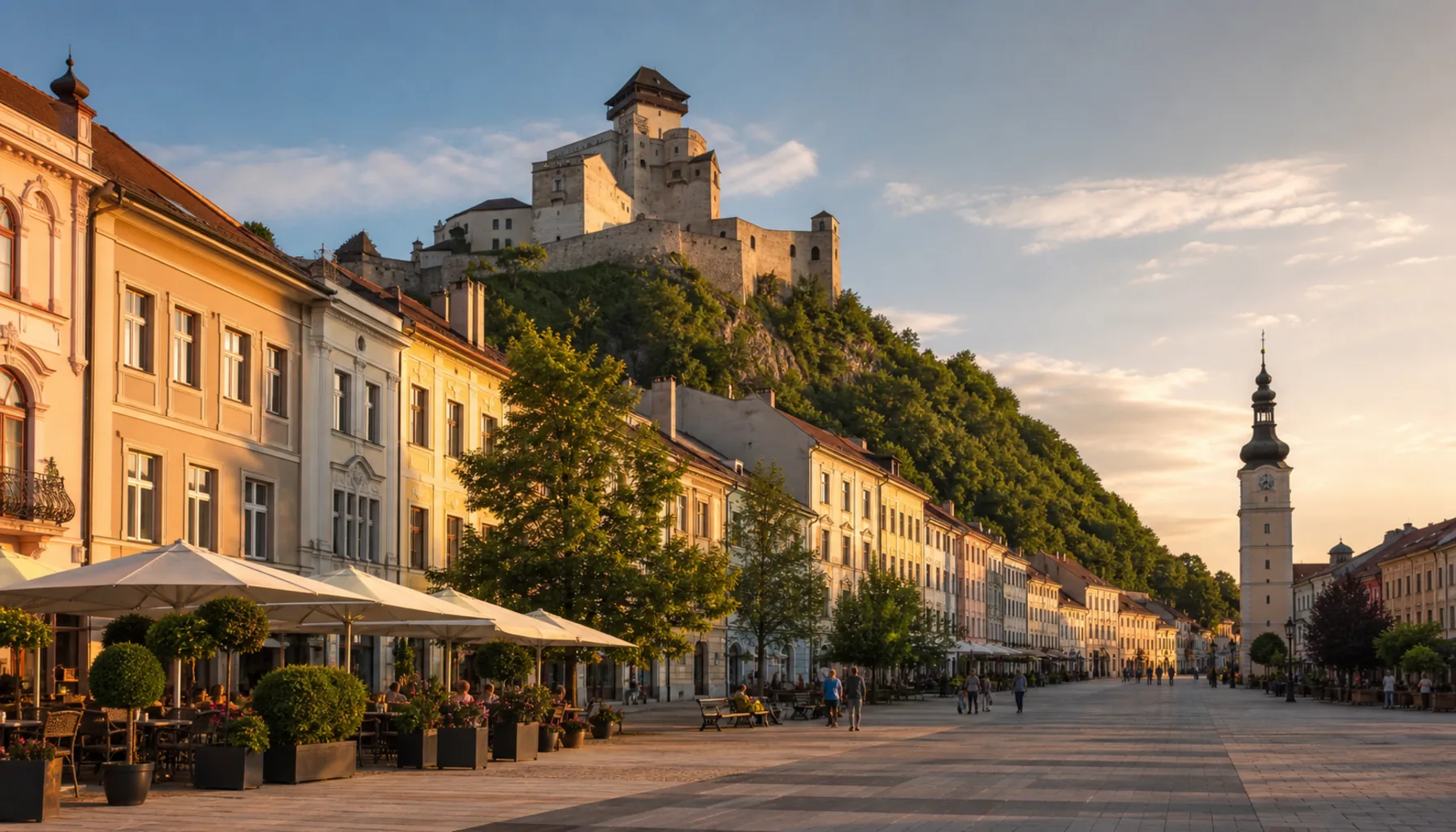
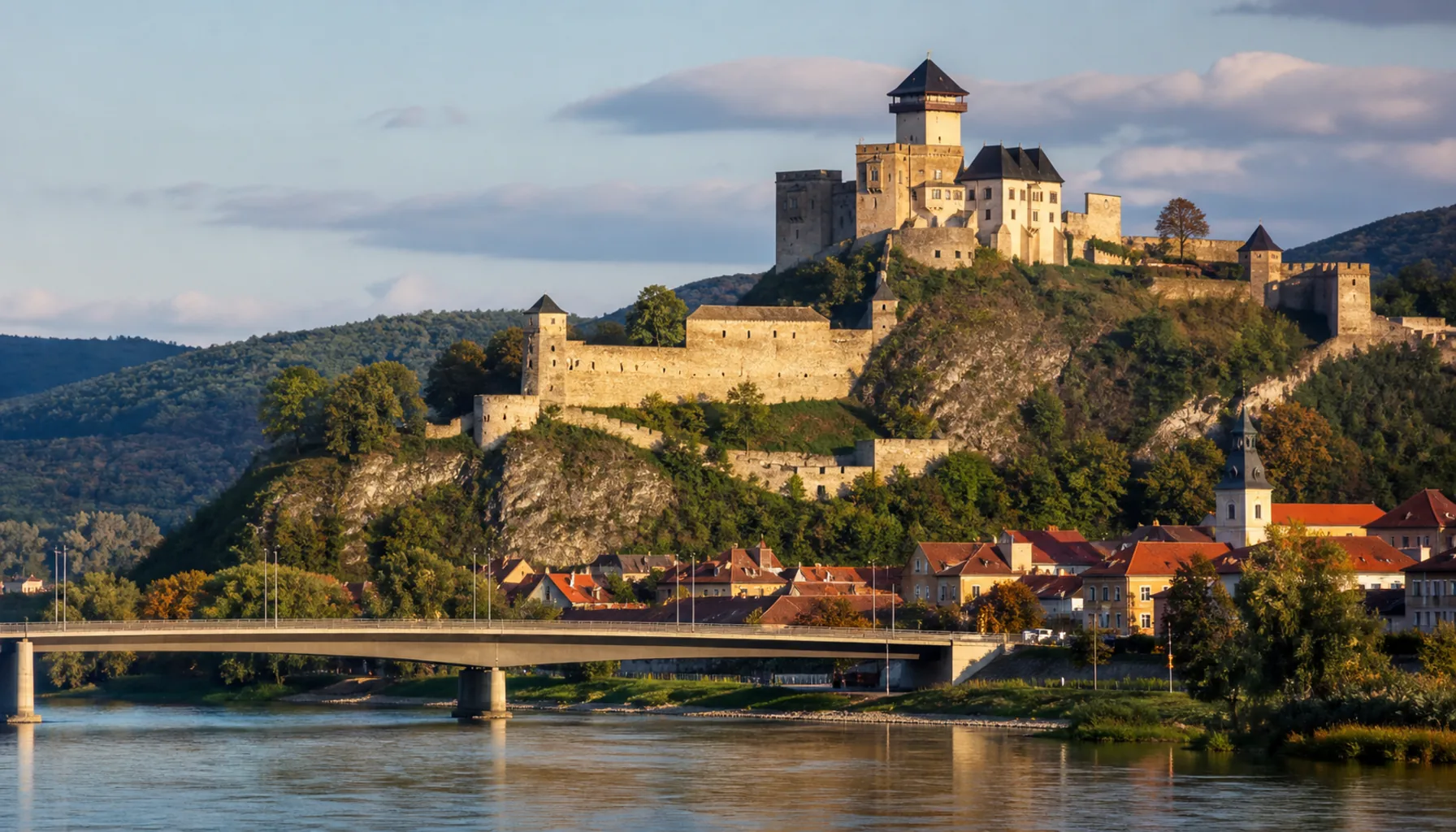
Wherever you stand in Trenčín, the castle is looking over your shoulder.Nech v Trenčíne stojíte kdekoľvek, hrad sa vám pozerá ponad plece.