Slovakia · Košice · marathonSlovensko · Košice · maratón
Košice Peace MarathonMedzinárodný maratón mieru
Europe's oldest marathon has been run in Košice since 1924, on the first Sunday of October. It began as eight men on the road from Turňa nad Bodvou; it is now the city's own Sunday, with a bronze runner standing near the finish.Najstarší maratón v Európe sa v Košiciach beží od roku 1924, vždy prvú októbrovú nedeľu. Začínal ako osem mužov na ceste z Turne nad Bodvou; dnes je to nedeľa celého mesta a neďaleko cieľa stojí bronzový bežec.
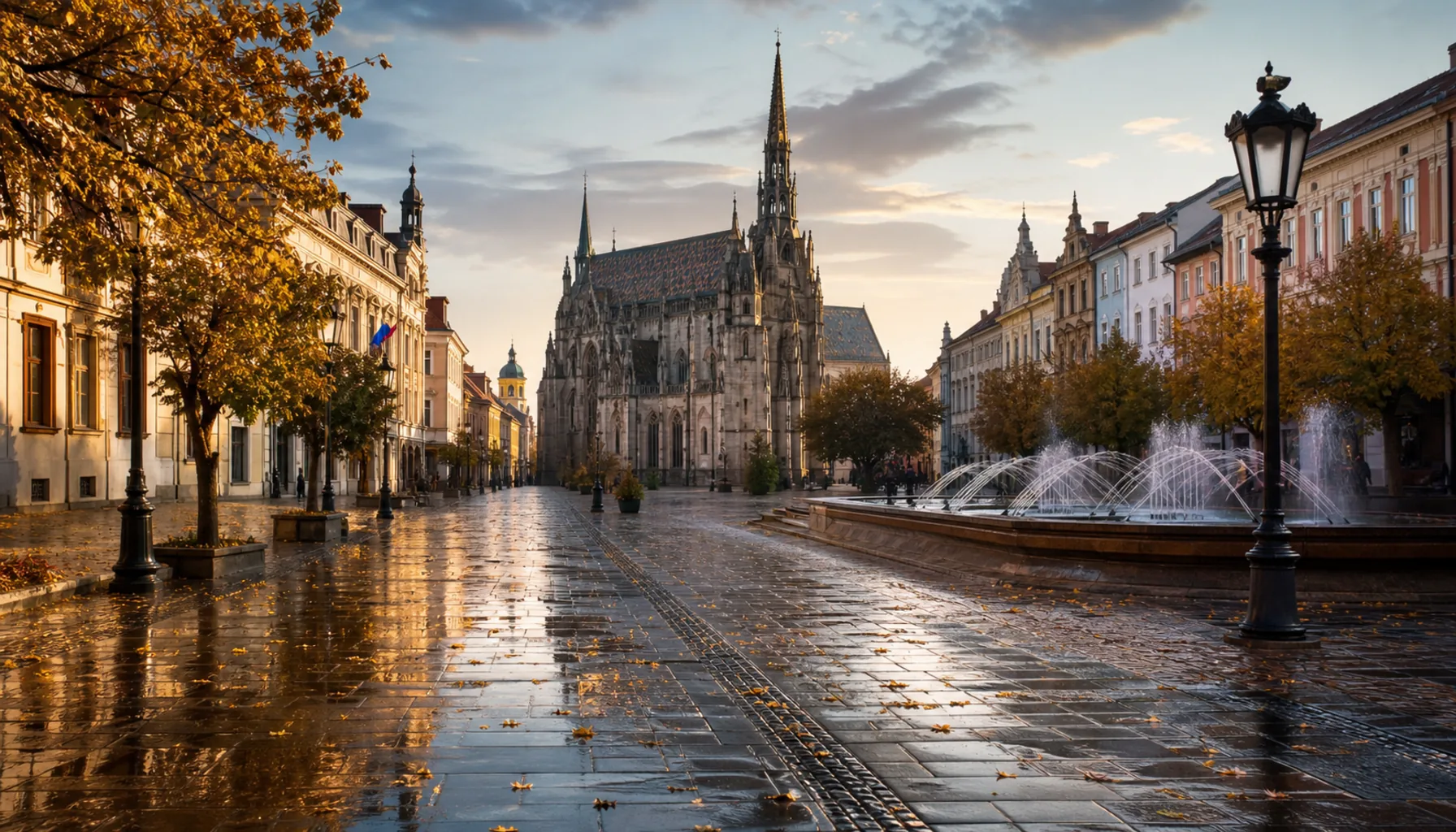
The long main square of Košice, where the race begins and ends.Dlhé hlavné námestie Košíc, kde sa beh začína aj končí.
Eight men on the road from TurňaOsem mužov na ceste z Turne
In the summer of 1924 Vojtech Braun-Bukovský, a Košice journalist and sports organiser, went to the Paris Olympics and watched the marathon. He came home certain his city should have one, and did not wait: on 28 October that same year eight runners lined up beneath the ruins of Turňa Castle.V lete 1924 sa košický novinár a športový organizátor Vojtech Braun-Bukovský vybral na olympijské hry do Paríža a videl tam maratónsky beh. Vrátil sa presvedčený, že vlastný maratón by malo mať aj jeho mesto — a neotáľal: 28. októbra toho istého roku sa pod zrúcaninou Turnianskeho hradu postavilo na štart osem bežcov.
They ran the full 42.195 km along the road east to Košice. The winner, twenty-five-year-old Karol Hála, finished in 3:01:35 — then came back to defend the title nine more times and never managed it again.Bežali celých 42,195 km po ceste na východ do Košíc. Zvíťazil dvadsaťpäťročný Karol Hála v čase 3:01:35 — potom sa prvenstvo pokúšal obhájiť ešte deväťkrát a už sa mu to nikdy nepodarilo.
A hundred runnings, no gapsSto ročníkov bez prerušenia
The word peace came later. The race was first the Slovak Marathon, then the Marathon of Freedom; it became the Marathon of Peace in 1951 and took its international prefix a year after. The Slovak name — Medzinárodný maratón mieru — has stood ever since, and everyone shortens it to MMM.Slovo mier prišlo až neskôr. Podujatie sa najprv volalo Slovenský maratón, potom Maratón slobody; Maratónom mieru sa stalo v roku 1951 a prívlastok medzinárodný dostalo o rok nato. Názov Medzinárodný maratón mieru odvtedy platí bez zmeny a všetci ho skracujú na MMM.
The unbroken line is the point. Only Boston, first run in 1897, is plainly older among races still held every year, and Košice has never skipped one: in 2020 it shrank the field to about two hundred runners on a ten-lap circuit rather than lose a year. That was the ninety-seventh running, the hundredth came in 2023, and World Athletics has marked the race with a heritage plaque.Podstatná je tá neprerušená línia. Spomedzi pretekov, ktoré sa konajú každoročne, je zreteľne starší len Boston z roku 1897, a Košice neprerušili sled ani raz: v roku 2020 radšej zúžili štartové pole na približne dvesto bežcov a desať okruhov, než by ročník vynechali. Bol to 97. ročník, stý prišiel v roku 2023 a World Athletics udelila pretekom pamätnú plaketu.
The city's own SundayNedeľa, ktorá patrí mestu
On the first Sunday of October the city hands over its centre. The streets around the old town close and families stand at the barriers for hours — not for the elite at the front, who are done in a little over two hours, but for the neighbours and colleagues coming through long after.Prvú októbrovú nedeľu odovzdá mesto svoje centrum bežcom. Ulice okolo starého mesta sa uzavrú a rodiny stoja pri zábranách celé hodiny — nie kvôli elite na čele, ktorá má po niečo vyše dvoch hodinách hotovo, ale kvôli susedom a kolegom, čo prichádzajú do cieľa oveľa neskôr.
None of this is a tourist event bolted onto Košice. The marathon is older than the Slovak Republic it is now run in, and older than the state it was born in — so the city treats it as inheritance, not a date: a square, a monument and a museum all take their name from it.Nie je to turistická atrakcia priložená ku Košiciam zvonku. Maratón je starší než Slovenská republika, v ktorej sa dnes beží, aj než štát, v ktorom vznikol — mesto ho preto berie ako dedičstvo, nie ako dátum: nesie po ňom meno námestie, pamätník aj múzeum.
Two laps of the old townDva okruhy starým mestom
The road from Turňa is long gone. The modern race starts and finishes on Hlavná ulica, the long spindle-shaped main street of the old town, and covers two flat, fully closed, entirely asphalt laps of the centre. The finish is at Marathon Square.Cesta z Turne je dávno minulosťou. Dnešné preteky štartujú aj končia na Hlavnej ulici, dlhom vretenovitom námestí starého mesta, a vedú po dvoch rovinatých, úplne uzavretých a celkom asfaltových okruhoch centrom. Cieľ je pri Námestí Maratónu mieru.
Two laps mean the crowd sees every runner twice, and the leaders pass the cathedral of St Elizabeth twice. A half marathon, relays and short runs for children share the same closed streets, so the day is far bigger than the marathon field. The difficulty here is the pace, not the profile.Dva okruhy znamenajú, že diváci vidia každého bežca dvakrát a čelo pretekov prebehne dvakrát okolo Dómu svätej Alžbety. Po tých istých uzavretých uliciach sa bežia aj polmaratón, štafety a krátke detské behy, takže deň je oveľa väčší než samotné maratónske pole. Ťažké je tu tempo, nie profil.
The bronze runner and the clubBronzový bežec a klub
The runner stands on Námestie Maratónu mieru, in front of the East Slovak Museum: a nude bronze figure more than three metres tall on a granite pedestal, by the sculptor Arpád Račko, unveiled in 1959. The pedestal carries the winners' names and the Greek NENIKHKAMEN — we have won — and the list has already outgrown the stone.Bežec stojí na Námestí Maratónu mieru pred Východoslovenským múzeom: nahá bronzová postava vysoká vyše troch metrov na žulovom podstavci, dielo sochára Arpáda Račka, odhalené v roku 1959. Na podstavci sú mená víťazov a grécke NENIKHKAMEN — zvíťazili sme — a zoznam mien sa naň už celkom nezmestí.
Since 2025 the race also has a house. MarathonPoint on Hlavná, a few steps from the cathedral, is a small museum whose touch panels let you look up competitors from almost every year, with Abebe Bikila's shoes among the medals and posters. The race itself is still put on by Maratónsky klub Košice together with the city.Od roku 2025 má maratón aj vlastný dom. MarathonPoint na Hlavnej, pár krokov od dómu, je malé múzeum, kde si na dotykových paneloch vyhľadáte pretekárov takmer z každého ročníka a medzi medailami a plagátmi sú aj topánky Abebeho Bikilu. Samotné preteky dodnes organizuje Maratónsky klub Košice spolu s mestom.