A pleso is a lake left behind by a glacier. The High Tatras hold most of the natural standing water in Slovakia in these hollows — all of it at or above the tree line, all of it inside a national park, and none of it open to swimmers.Pleso je jazero, ktoré po sebe zanechal ľadovec. Vo Vysokých Tatrách je v takýchto kotloch sústredená väčšina prirodzenej stojatej vody na Slovensku — celá na hranici lesa alebo nad ňou, celá v národnom parku a ani jedno pleso nie je otvorené kúpajúcim.
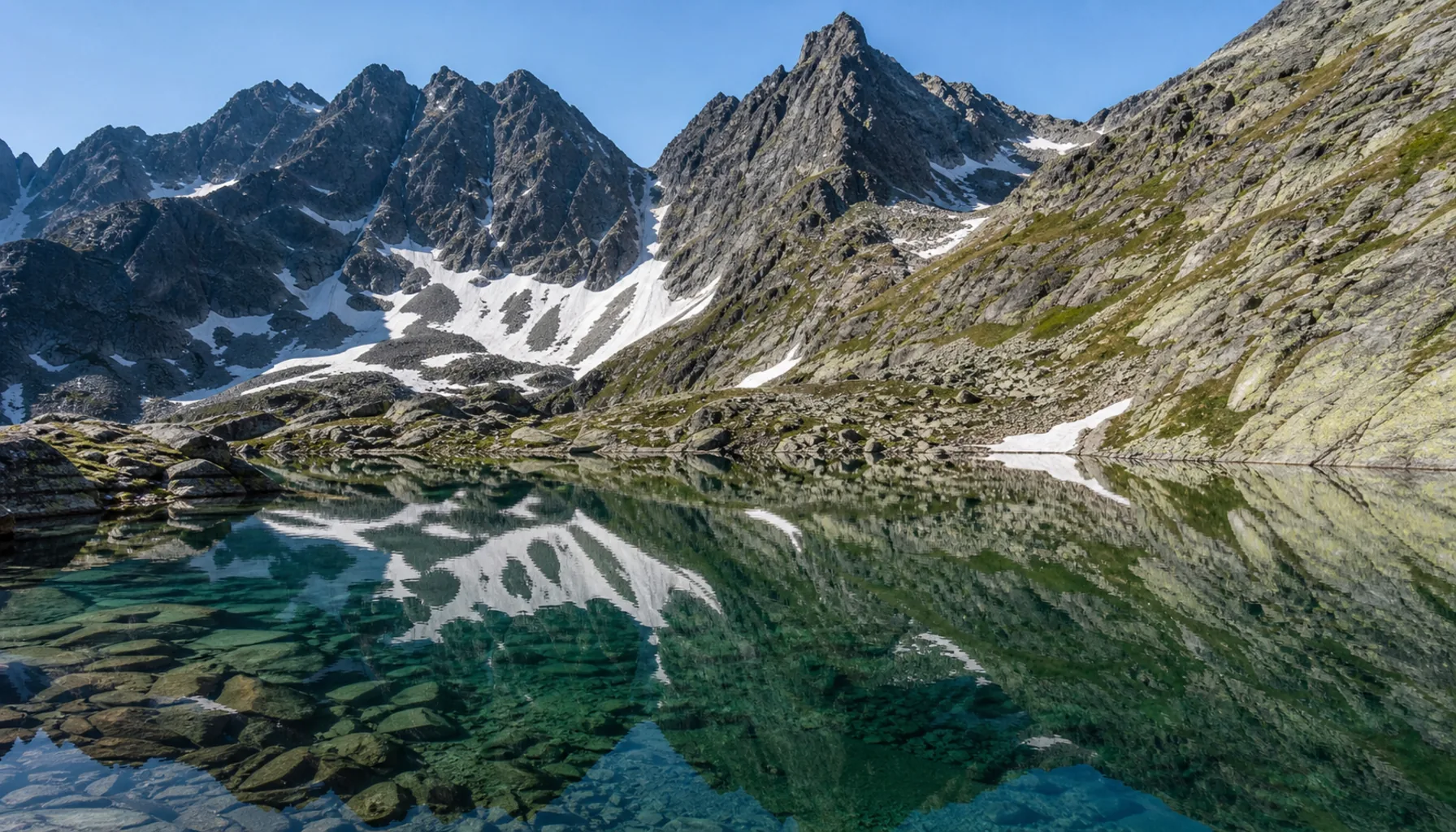
Veľké Hincovo pleso in its rock basin under the peaks of the Mengusovská valleyVeľké Hincovo pleso v skalnej kotline pod štítmi Mengusovskej doliny
What the ice leftČo zanechal ľadovec
During the last glaciations the valleys of the Tatras carried glaciers. The ice quarried their heads into steep-walled cirques, scoured basins into the rock floor and pushed ridges of debris downhill as moraines. When the ice went, meltwater and rain filled the hollows behind the rock lips and moraine dams. The tarns are what is left of the glacier's plumbing.Počas posledných zaľadnení niesli tatranské doliny ľadovce. Ľad vyhĺbil ich závery do karov so strmými stenami, vybrúsil panvy do skalného dna a pred sebou natlačil valy sutiny — morény. Keď ľad ustúpil, topiaca sa voda a zrážky kotly za skalnými prahmi a morénami zaplnili. Plesá sú stopou po vodných cestách ľadovca.
There are on the order of a hundred permanent tarns on the Slovak side and many more pools that dry out in a hot summer. They lie in chains down the big valleys — Mengusovská, Mlynická, Furkotská, the two Studená valleys — and each chain records where the glacier paused. Most are small, all are cold, and the largest sit in the upper basins where the ice worked hardest.Na slovenskej strane je zhruba sto stálych plies a oveľa viac jazierok, ktoré v horúcom lete vyschnú. Ležia v reťaziach vo veľkých dolinách — v Mengusovskej, Mlynickej, Furkotskej a v oboch Studených dolinách — a každá reťaz zaznamenáva, kde sa ľadovec zastavil. Väčšina je malá, všetky sú studené a tie najväčšie ležia v horných kotloch, kde ľad pracoval najtvrdšie.
The Western Tatras have their own smaller set, of which the Roháčske plesá in the Roháčska valley are best known, and the Low Tatras, glaciated far less, have almost none. Below the Tatras the country has essentially no natural lakes at all, which is why these ones carry so much weight.Západné Tatry majú vlastnú menšiu skupinu, z ktorej sú najznámejšie Roháčske plesá v Roháčskej doline, a Nízke Tatry, zaľadnené oveľa menej, nemajú takmer nič. Pod Tatrami už krajina prirodzené jazerá v podstate nemá — a preto majú tieto takú váhu.
The ones with namesPlesá, ktoré majú meno
Štrbské pleso is the one almost everyone sees: a moraine-dammed lake at the tree line with a resort, a railway station and hotels around it, the only great tarn reachable without walking. Popradské pleso, an hour above the valley on foot, is its counterweight — spruce forest, a chalet, and above it the Symbolic Cemetery, where plaques remember people the mountains have killed.Štrbské pleso je to, ktoré vidí takmer každý: morénou hradené jazero na hranici lesa so strediskom, železničnou stanicou a hotelmi okolo, jediné veľké pleso dostupné bez chôdze. Protiváhou je Popradské pleso hodinu pešo nad dolinou — smrekový les, chata a nad ním Symbolický cintorín s tabuľkami pripomínajúcimi tých, ktorých si hory vzali.
Veľké Hincovo pleso, higher up the same valley under the wall of Vysoká, is the largest and deepest tarn in the Tatras, and the path to it is a proper mountain walk over rock. Modré pleso in the Malá Studená valley is usually named the highest of the permanent tarns. Skalnaté pleso under Lomnický štít is the odd one out: it can shrink to almost nothing in a dry autumn and it has a cable-car station and an observatory on its shore.Veľké Hincovo pleso vyššie v tej istej doline pod stenou Vysokej je najväčšie a najhlbšie pleso v Tatrách a cesta k nemu je poriadnou horskou túrou po skalách. Modré pleso v Malej Studenej doline sa zvyčajne uvádza ako najvyššie stále pleso. Skalnaté pleso pod Lomnickým štítom je výnimkou: v suchej jeseni sa scvrkne takmer na nič a na brehu má stanicu lanovky a observatórium.
Others are known for their setting rather than their size. Zelené pleso lies under the vertical face of Jastrabia veža with a chalet on the bank, one of the classic day walks in the range; Batizovské and Velické plesá sit in hanging valleys on the southern side, reached by the trails that traverse the whole massif at that height.Iné sú známe skôr prostredím než rozlohou. Zelené pleso leží pod kolmou stenou Jastrabej veže, na brehu stojí chata a patrí ku klasickým jednodňovým túram pohoria; Batizovské a Velické pleso ležia vo visutých dolinách na južnej strane a vedú k nim chodníky, ktoré celý masív v tejto výške traverzujú.
Why nobody swims in themPrečo sa v nich nekúpe
The tarns are oligotrophic: extremely low in nutrients, very clear, very cold and biologically poor. That is their normal state rather than a defect, and it makes them fragile. There is almost nothing in the water to break down what gets added to it, and the growing season at that altitude lasts a few weeks, so damage takes years to disappear.Plesá sú oligotrofné: mimoriadne chudobné na živiny, veľmi číre, veľmi studené a biologicky chudobné. Nie je to chyba, ale ich normálny stav — a preto sú krehké. Vo vode nie je takmer nič, čo by rozložilo to, čo do nej pribudne, a vegetačné obdobie v tejto výške trvá pár týždňov, takže poškodenie mizne roky.
Swimming, wading and washing in them are therefore forbidden throughout the Tatra National Park, along with camping, open fires and leaving the marked trails. Sun cream, soap and repellent all end up in the water; walking the shoreline breaks down moraine that took ten thousand years to settle. The park has existed since 1949, the oldest in Slovakia, and the tarns are the reason most often given for its strictness.Kúpanie, brodenie a umývanie sú preto v celom Tatranskom národnom parku zakázané — rovnako ako táborenie, otvorený oheň a vychádzanie mimo značených chodníkov. Opaľovací krém, mydlo aj repelent skončia vo vode; chôdza po brehu rozrušuje morénu, ktorá sa usádzala desaťtisíc rokov. Park existuje od roku 1949, je najstarší na Slovensku, a plesá sú najčastejšie uvádzaným dôvodom jeho prísnosti.
There is a research argument as well. Several Tatra tarns carry among the longest continuous chemical and biological records of any high-mountain lakes in Europe: they registered the acidification caused by industrial sulphur and then, slowly, its reversal. That series stays useful only if the water is left alone.Existuje aj výskumný dôvod. Viaceré tatranské plesá majú jedny z najdlhších súvislých chemických a biologických radov spomedzi vysokohorských jazier v Európe: zaznamenali okysľovanie spôsobené priemyselnou sírou a potom aj jeho pomalý ústup. Tento rad zostane užitočný len vtedy, ak sa vody nikto nedotkne.
Above the tree lineNad hranicou lesa
Almost every tarn worth walking to lies above the last trees, which means there is no shelter. Weather in the Tatras changes faster than any forecast issued in the valley, summer afternoons build thunderstorms, and an open shore under a wall of rock is the worst place to be caught by one. Start early and be off the high ground by early afternoon.Takmer každé pleso, ku ktorému sa oplatí ísť, leží nad poslednými stromami, čo znamená, že tam nie je žiadny úkryt. Počasie v Tatrách sa mení rýchlejšie než ktorákoľvek predpoveď vydaná v doline, letné popoludnia prinášajú búrky a otvorený breh pod skalnou stenou je tým najhorším miestom, kde sa dá búrku chytiť. Treba vyraziť skoro a byť z hrebeňov dole v prvej polovici popoludnia.
The high trails of the national park are closed every year from the first of November to the fifteenth of June, which covers snow, avalanche danger and the thaw. Tarns freeze from autumn and some hold ice into June; a snow-covered frozen lake in a cirque is not always recognisable as a lake at all. The valley routes and Štrbské pleso stay open all year.Vysokohorské chodníky národného parku sú každoročne od prvého novembra do pätnásteho júna uzavreté, čo pokrýva sneh, lavínové nebezpečenstvo aj topenie. Plesá zamŕzajú od jesene a niektoré držia ľad do júna; zamrznuté pleso pokryté snehom v kare sa ako jazero vôbec nemusí dať rozoznať. Dolinové trasy a Štrbské pleso zostávajú otvorené po celý rok.
The rest is ordinary mountain sense: boots rather than trainers, warm and waterproof layers in the rucksack even in August, enough water for the ascent, and a turn-back time decided before setting out. Mountain rescue covers the whole range, its number is worth having in a phone, and in bad weather a helicopter cannot fly.Zvyšok je bežný horský rozum: obuv namiesto tenisiek, teplá a nepremokavá vrstva v batohu aj v auguste, dosť vody na výstup a čas obratu určený ešte pred odchodom. Horská záchranná služba pokrýva celé pohorie, jej číslo sa oplatí mať v telefóne a v zlom počasí vrtuľník nevzlietne.