Regular steam working ended on the Czechoslovak railways around 1980. What survived is in three kinds of place: the museum collections in Bratislava and Košice, the running locomotives kept by volunteer clubs at depots such as Vrútky, and the forest railways, which never stopped using theirs.Pravidelná parná prevádzka sa na československých železniciach skončila okolo roku 1980. To, čo prežilo, je na troch typoch miest: v múzejných zbierkach v Bratislave a Košiciach, medzi prevádzkyschopnými rušňami dobrovoľníckych klubov v depách ako Vrútky a na lesných železniciach, ktoré tie svoje nikdy neodstavili.
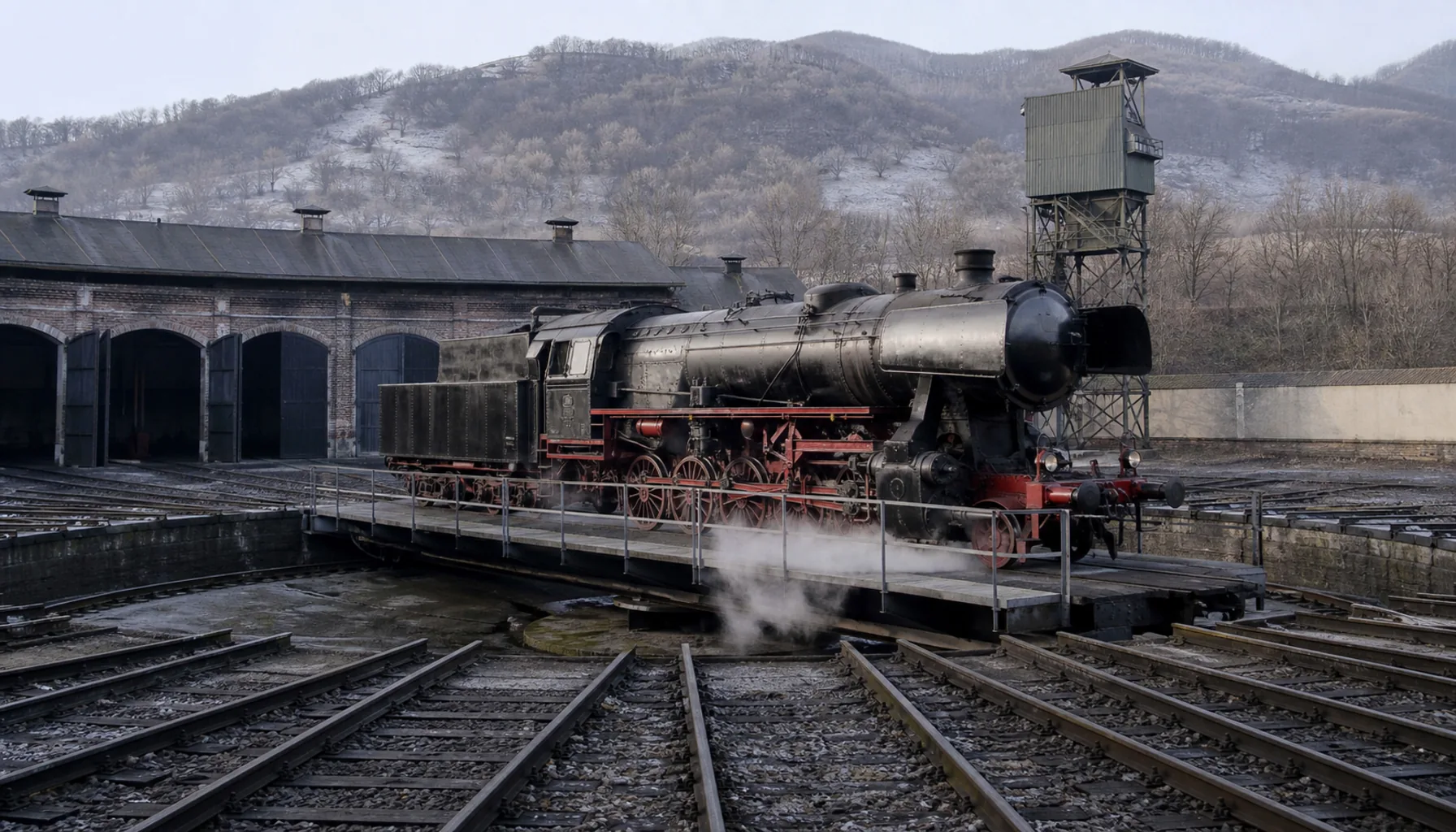
A preserved steam locomotive on the turntable outside the engine shed at VrútkyZachovaný parný rušeň na točni pred rušňovou výhrevňou vo Vrútkach
The end of steam, and what was keptKoniec pary a čo z nej zostalo
Steam came off regular duties on the Czechoslovak state railways around 1980, later than in much of western Europe and then very quickly. Most of the fleet was cut up within a few years. A minority survived by accident or by argument: engines held in reserve, engines set on plinths outside stations, engines kept back by depot staff who meant to run them again.Parné rušne odišli z pravidelnej služby na československých štátnych železniciach okolo roku 1980 — neskôr než vo väčšine západnej Európy a potom veľmi rýchlo. Väčšinu parku za pár rokov rozrezali. Menšina prežila náhodou alebo vďaka tvrdohlavosti: stroje odstavené v rezerve, stroje vyzdvihnuté na podstavce pred stanicami, stroje, ktoré si zamestnanci dep nechali s úmyslom ešte s nimi jazdiť.
The preserved Slovak fleet therefore has a particular shape. It is strongest in the classes that actually worked here to the end — freight and mixed-traffic engines from the interwar and postwar Czechoslovak works — and it is concentrated where enough people cared, which in practice means a handful of depots.Zachovaný slovenský park má preto zvláštny tvar. Najsilnejší je v radoch, ktoré tu naozaj slúžili do konca — v nákladných a univerzálnych strojoch z medzivojnovej a povojnovej československej výroby — a sústreďuje sa tam, kde sa našlo dosť ľudí, čo v praxi znamená v hŕstke dep.
Vrútky, a town the railway madeVrútky, mesto, ktoré vytvorila železnica
Vrútky sits in the Turiec basin where the line from Žilina turns east for Liptov, the Tatras and Košice, and it became one of the most important railway places in the country: a junction, a large locomotive depot and repair works that employed the town. Martin next door is the older settlement; Vrútky is the one the railway made.Vrútky ležia v Turčianskej kotline tam, kde sa trať zo Žiliny stáča na východ do Liptova, k Tatrám a do Košíc, a stalo sa z nich jedno z najdôležitejších železničných miest v krajine: uzol, veľké rušňové depo a opravovne, ktoré živili celé mesto. Susedný Martin je staršie sídlo; Vrútky sú tie, ktoré vytvorila železnica.
It still is one. The repair works in the town overhaul rolling stock for the state railway and for private operators, which is the reason a place of this size has engineering skills of a kind that a preserved locomotive needs and that most heritage railways have to buy in from a long way off.Sú ním dodnes. Opravovne v meste modernizujú a opravujú koľajové vozidlá pre štátnu železnicu aj pre súkromných dopravcov — a práve preto má mesto tejto veľkosti strojárske remeslo takého druhu, aký zachovaný rušeň potrebuje a aký si väčšina historických železníc musí objednávať zďaleka.
The depot is still the centre of Slovak steam preservation. A club based there keeps locomotives in running order and takes them out on excursion trains, and its open days bring engines onto the turntable in front of the shed — one of the few places where the noise and the smell of a working steam depot can still be had.Depo je dodnes centrom slovenskej záchrany parných rušňov. Klub, ktorý v ňom sídli, udržiava stroje v prevádzkyschopnom stave a vychádza s nimi na nostalgické vlaky; počas dní otvorených dverí sa rušne postavia na točňu pred výhrevňou — je to jedno z mála miest, kde sa hluk a vôňa činného parného depa dajú ešte zažiť.
The Bratislava and Košice collectionsZbierky v Bratislave a Košiciach
The Transport Museum in Bratislava occupies the buildings of the city's first railway station, the terminus of the horse-drawn line towards Trnava begun in 1840 — the first railway in the Kingdom of Hungary, worked by horses because that was what its promoters could afford. Steam locomotives, carriages and road vehicles now stand in the halls and the yard behind it.Múzeum dopravy v Bratislave sídli v budovách prvej bratislavskej železničnej stanice — konečnej konskej železnice smerom na Trnavu, ktorú začali stavať v roku 1840. Bola to prvá železnica v Uhorsku a ťahali ju kone preto, že na viac jej stavitelia nemali peniaze. V halách a na koľajisku za budovou dnes stoja parné rušne, vozne aj cestné vozidlá.
The museum is a branch of the Slovak Technical Museum, whose main building is in Košice; between them they hold the national technical collections. The railway's own historic fleet is based at the eastern depot in Bratislava, known to enthusiasts as Rendez, which opens to the public for an annual railway day.Múzeum je pobočkou Slovenského technického múzea, ktorého hlavná budova stojí v Košiciach; spolu spravujú národné technické zbierky. Historický park samotnej železnice je odstavený v bratislavskom východnom depe, medzi nadšencami známom ako Rendez, ktoré sa raz do roka otvára verejnosti počas dňa železnice.
Neither site is large by European standards and neither pretends to be a working railway. They are where the machines are catalogued, roofed and kept; the running is done elsewhere.Ani jedno z tých miest nie je na európske pomery veľké a ani jedno nepredstiera, že je činnou železnicou. Sú to miesta, kde sú stroje zaevidované, pod strechou a v opatere; jazdí sa inde.
Where steam actually appearsKde sa para naozaj objaví
Steam on the mainline is always a special working — an anniversary, a photographic charter, a museum open day — announced weeks ahead and gone the same evening. It is never in the timetable, and there is no route in Slovakia where it can be counted on.Para na hlavnej trati je vždy mimoriadna jazda — výročie, fotografická jazda, deň otvorených dverí — ohlásená týždne dopredu a v ten istý večer preč. V cestovnom poriadku nikdy nie je a na Slovensku niet trate, kde by sa na ňu dalo spoľahnúť.
The dependable steam is narrow gauge, on the forest railways, where small locomotives work the summer trains and the whole operation is built around them. Those railways keep their engines in their own sheds, so what a visitor sees there is not only a locomotive but the fire being lit, the water column, the ash pit and the crew.Spoľahlivá para je úzkorozchodná, na lesných železniciach, kde malé rušne ťahajú letné vlaky a celá prevádzka je postavená okolo nich. Tie železnice si stroje udržiavajú vo vlastných výhrevniach, takže návštevník tam nevidí len rušeň, ale aj zakladanie ohňa, vodný žeriav, popolovú jamu a posádku.
Anyone hoping to see a locomotive under steam should plan around events rather than around routes: the forest railways' opening weekends, the depot open days at Vrútky and in Bratislava, and the anniversary specials that mark the opening of a line.Kto chce vidieť rušeň pod parou, mal by si plánovať podľa podujatí, nie podľa tratí: podľa otváracích víkendov lesných železníc, dní otvorených dverí v depe vo Vrútkach a v Bratislave a podľa výročných mimoriadnych vlakov k otvoreniu tej-ktorej trate.