Technical & Industrial MuseumsTechnické a priemyselné múzeá
Mining paid for this country for six centuries and industry for the last one. The museums that keep that record are the ones where you put a helmet on, and most of them stand in the towns where the work was done.Šesť storočí túto krajinu živilo baníctvo a posledné storočie priemysel. Múzeá, ktoré tento záznam uchovávajú, sú tie, v ktorých si nasadíte prilbu — a väčšina stojí v mestách, kde sa tá práca robila.
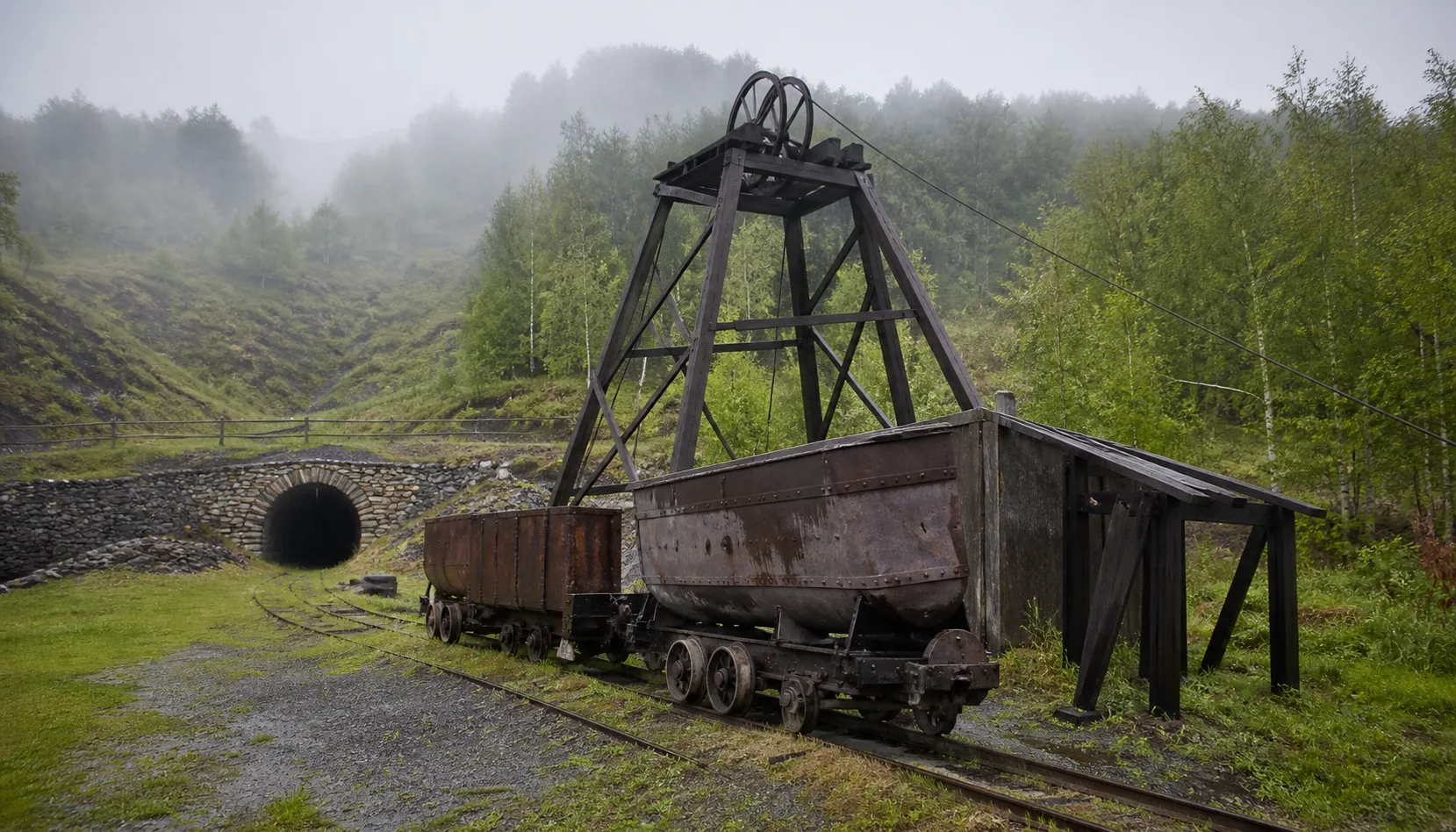
Pithead machinery and ore wagons at the open-air mining museum below Banská ŠtiavnicaŤažné zariadenie a banské vozíky v banskom múzeu v prírode pod Banskou Štiavnicou
The Slovak Technical MuseumSlovenské technické múzeum
The national technical collection is in Košice, on Hlavná, and it is more varied than the name suggests: metallurgy and mining, energy and machine tools, a reconstructed historic chemistry laboratory assembled from the fittings of old apothecaries and school cabinets, and a planetarium under the same roof.Národná technická zbierka sídli v Košiciach na Hlavnej a je pestrejšia, než názov naznačuje: hutníctvo a baníctvo, energetika a obrábacie stroje, zrekonštruované historické chemické laboratórium zložené zo zariadenia starých lekární a školských kabinetov a pod tou istou strechou aj planetárium.
Its branches are spread across the east and the capital. The Transport Museum in Bratislava occupies the hall and yard of a disused railway station in the middle of the city, with locomotives standing on original track; the Aviation Museum sits at Košice airport; a manor at Budimír holds a collection of clocks; and a water-driven hammer forge survives at Medzev in the Bodva valley, where hammers of that kind once made ironware for half the kingdom.Jeho pobočky sú rozptýlené po východe a v hlavnom meste. Múzeum dopravy v Bratislave zaberá halu a areál nepoužívanej železničnej stanice v strede mesta, kde na pôvodných koľajach stoja rušne; Múzeum letectva je pri košickom letisku; kaštieľ v Budimíre uchováva zbierku hodín; a v Medzeve v údolí Bodvy sa zachoval vodou poháňaný hámor — kladivá tohto druhu kedysi vyrábali železiarsky tovar pre pol kráľovstva.
Solivar, on the edge of Prešov, is the one to make time for. Salt was mined here in the Middle Ages until the workings flooded; after that the brine was raised up the Leopold shaft by a horse-driven whim, boiled down in a timber evaporation hall and kept in a salt store the size of a church. The whole plant survives, machinery included, as a national cultural monument.Solivar na okraji Prešova je miesto, na ktoré si treba nájsť čas. Soľ tu ťažili v stredoveku, kým bane nezatopila voda; potom sa soľanka čerpala šachtou Leopold konským gápľom, odparovala sa v drevenej varni a skladovala v sklade veľkom ako kostol. Celý závod sa zachoval aj so strojmi ako národná kultúrna pamiatka.
Silver, copper and coinStriebro, meď a minca
The Slovak Mining Museum is spread across the town it belongs to. At Banská Štiavnica it holds the Old Castle and the New Castle, a mineral collection in the old mining court on the square, a gallery of painting in a burgher house, and the open-air mining museum at the edge of town, where the visit ends underground in a real eighteenth-century adit with a helmet and a lamp.Slovenské banské múzeum je rozložené po celom meste, ktorému patrí. V Banskej Štiavnici má Starý zámok aj Nový zámok, mineralogickú zbierku v starom banskom súde na námestí, galériu maliarstva v meštianskom dome a na okraji mesta banské múzeum v prírode, kde sa prehliadka končí pod zemou v skutočnej štôlni z 18. storočia s prilbou a lampou.
Its origins lie in the teaching collections of the mining academy founded here in the 1760s, the first school of its kind anywhere, which needed samples, models and machines to teach with. The town's UNESCO listing covers the mining landscape as much as the streets: the tajchy, the reservoirs built to drive the pumps, belong to the same system.Jeho počiatky sú v učebných zbierkach baníckej akadémie založenej tu v šesťdesiatych rokoch 18. storočia — prvej školy svojho druhu na svete — ktorá potrebovala vzorky, modely a stroje na vyučovanie. Zápis mesta do UNESCO zahŕňa banskú krajinu rovnako ako ulice: tajchy, nádrže postavené na poháňanie čerpadiel, patria do tej istej sústavy.
Banská Bystrica's metal was copper, and the company that traded it — the Thurzo and Fugger partnership of the sixteenth century — reached from these valleys to Antwerp. The Central Slovak Museum keeps that record in the Thurzo house on the square. Kremnica, over the hills, was the gold town: its museum of coins and medals belongs to the national bank, and the mint a few streets away has been striking coin since the fourteenth century — a working factory rather than an exhibit.Kovom Banskej Bystrice bola meď a spoločnosť, ktorá s ňou obchodovala — thurzovsko-fuggerovský podnik 16. storočia — siahala z týchto dolín až do Antverp. Stredoslovenské múzeum tento záznam uchováva v Thurzovom dome na námestí. Kremnica za kopcami bola zlatým mestom: jej Múzeum mincí a medailí patrí národnej banke a mincovňa o pár ulíc ďalej razí mince od 14. storočia — je to fungujúca fabrika, nie exponát.
Machines that still runStroje, ktoré ešte chodia
The hardest exhibit to keep is one that has to work. Two forest railways in the north do it: the switchback climb at Vychylovka, part of the Kysuce open-air museum and one of very few such lines surviving anywhere, and the Čierny Hron railway at Čierny Balog, which runs trains on its own restored track through the forests of Horehronie.Najťažšie sa uchováva exponát, ktorý musí fungovať. Na severe to zvládajú dve lesné železnice: úvraťová trať vo Vychylovke, ktorá patrí ku Kysuckému skanzenu a je jednou z mála zachovaných na svete, a Čiernohronská železnica v Čiernom Balogu, ktorá vozí vlaky po vlastnej obnovenej trati lesmi Horehronia.
Both are kept going in large part by volunteers, which is the usual arrangement for working machinery here, and both run a season rather than a year-round timetable. The same is true of most industrial monuments: the machine is generally fine, but somebody has to be there to run it.Obe do veľkej miery držia dobrovoľníci, čo je pri funkčných strojoch tunajšie pravidlo, a obe jazdia v sezóne, nie po celý rok. Platí to o väčšine technických pamiatok: stroj býva v poriadku, ale musí pri ňom niekto stáť.
The company townsFiremné mestá
Two Slovak towns are exhibits in themselves. Svit, below the Tatras, was laid out by the Baťa company in the mid-1930s around a plant making viscose fibre, and the town's name is the initials of that works; Chemosvit occupies the site today. Baťovany, further west, was founded in 1938 around a shoe factory and renamed Partizánske after the war.Dve slovenské mestá sú exponátom samy osebe. Svit pod Tatrami vytýčila firma Baťa v polovici tridsiatych rokov okolo závodu na výrobu viskózového vlákna a názov mesta je skratkou tejto továrne; areál dnes zaberá Chemosvit. Baťovany ďalej na západ vznikli v roku 1938 okolo obuvníckej fabriky a po vojne ich premenovali na Partizánske.
Both were built to one design: the factory on one side, a grid of low brick family houses on the other, a community house, a school and a cinema in the middle, all of it put up within a few years. Whatever one makes of the model, it produced the most complete pieces of interwar planning in the country, and they are best read by walking them.Obe stavali podľa jedného zámeru: na jednej strane fabrika, na druhej pravidelná sieť nízkych tehlových rodinných domov, uprostred spoločenský dom, škola a kino — a všetko za pár rokov. Nech si o tomto modeli myslí ktokoľvek čokoľvek, vznikli tak najucelenejšie súbory medzivojnového urbanizmu v krajine a najlepšie sa čítajú prechádzkou.
Collections of company history in towns like these usually belong to the firm rather than to a public museum, and are opened by arrangement rather than on a timetable. If that is what you are travelling for, ask first.Zbierky firemných dejín v takýchto mestách zvyčajne patria podniku, nie verejnému múzeu, a sprístupňujú sa po dohode, nie podľa otváracích hodín. Ak cestujete práve za nimi, najprv sa opýtajte.