Slovakia · MuseumsSlovensko · Múzeá

The Regional MuseumsRegionálne múzeá

Almost every district town of any size keeps a museum, most of them run by the region and most of them in the best old building available. What is inside follows a pattern set a century and a half ago.Takmer každé väčšie okresné mesto má múzeum, väčšinu z nich spravuje kraj a väčšina sídli v najlepšej starej budove, aká bola k dispozícii. To, čo je vnútri, sleduje vzorec spred stopäťdesiatich rokov.

What a kraj museum holdsČo obsahuje krajské múzeum

The order is nearly always the same. Geology and stuffed fauna on one floor; archaeology from the local digs on another, with the flint, the urns and the bronze brooches laid out by period; then the town itself — charters, guild chests, weights and measures, a printing press; then costume, looms and farm tools; and a last room on the twentieth century that usually stops somewhere around 1989.Poradie býva takmer vždy rovnaké. Na jednom poschodí geológia a vypreparované zvieratá, na druhom archeológia z miestnych výskumov s pazúrikom, urnami a bronzovými sponami uloženými po obdobiach; potom samotné mesto — listiny, cechové truhlice, závažia a miery, tlačiarenský lis; potom kroj, krosná a roľnícke náradie; a posledná miestnosť o 20. storočí, ktorá sa zvyčajne zastaví niekde pri roku 1989.

This is the vlastivedné model, and it survives because these museums were founded by county societies whose subject was the whole district rather than one discipline. They are also working repositories: what comes out of a rescue excavation on a motorway route or a gas trench goes to the regional museum, is catalogued there and mostly stays there.Toto je vlastivedný model a prežíva preto, že tieto múzeá zakladali župné spolky, ktorých témou bol celý okres, nie jeden odbor. Sú zároveň funkčnými depozitármi: čo vyjde zo záchranného výskumu na trase diaľnice alebo v plynovej ryhe, ide do regionálneho múzea, tam sa spracuje a väčšinou tam aj zostane.

For a visitor that makes the regional museum the fastest way to understand where you are standing. An hour in it explains the shape of the valley, who was buried in the field beside the road, why the square has the length it has, and which factory emptied the villages around.Pre návštevníka je preto regionálne múzeum najrýchlejšou cestou k pochopeniu miesta, na ktorom stojí. Hodina v ňom vysvetlí tvar doliny, kto je pochovaný na poli pri ceste, prečo má námestie práve takú dĺžku a ktorá továreň vyprázdnila okolité dediny.

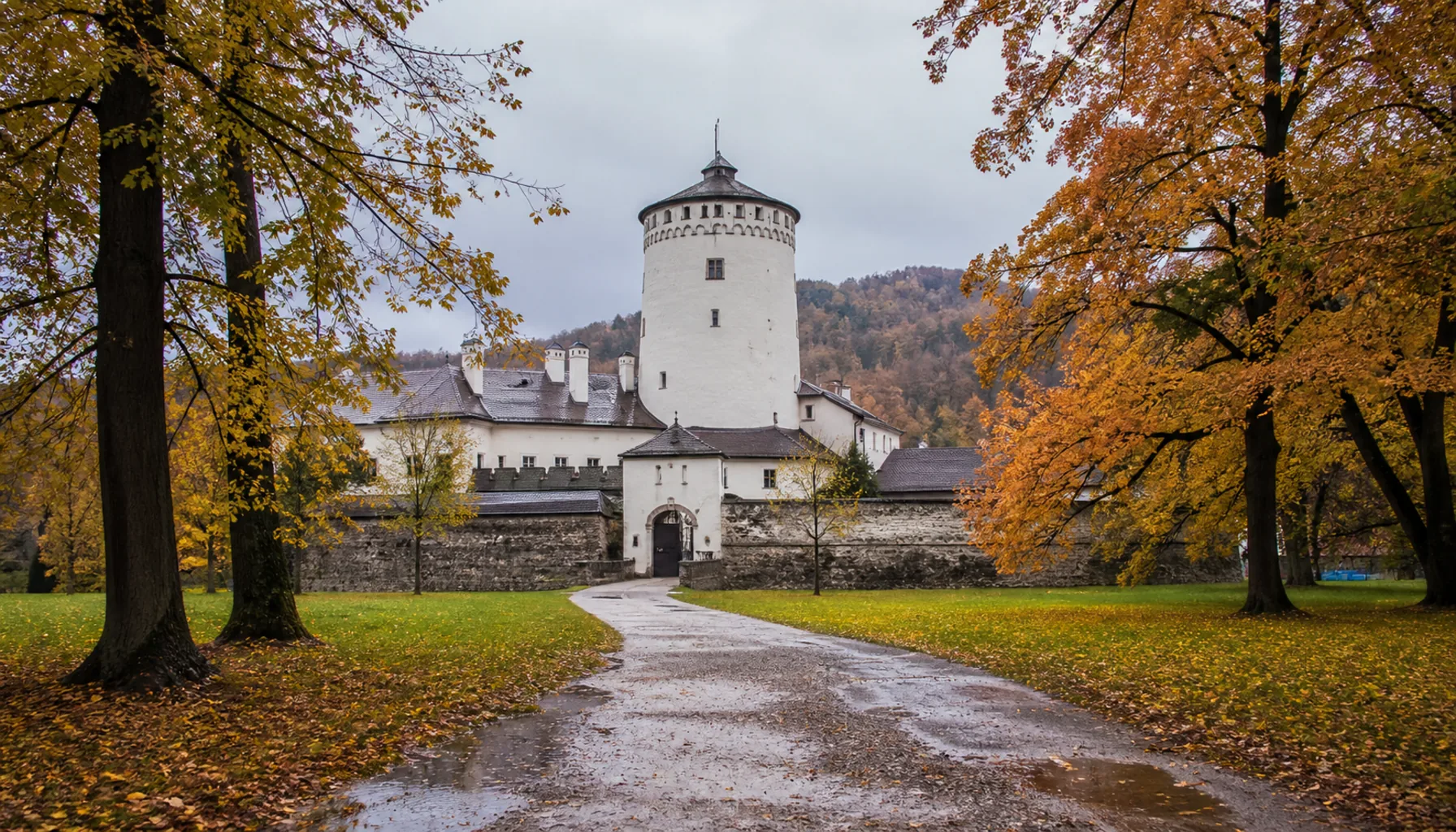
Budatín Castle by Žilina, home of the Považie Museum and its collection of tinkers' wirework
Budatín Castle by Žilina, home of the Považie Museum and its collection of tinkers' wireworkBudatínsky hrad pri Žiline, sídlo Považského múzea a jeho zbierky drotárskych prác

Houses around the countryDomy po celej krajine

The Tekov Museum has its seat inside the walls of Levice castle, a fortress that held the Hron crossing through the Ottoman century. The Ponitrie Museum at Nitra carries one of the heaviest archaeological collections in the country, because the land around it has been settled continuously since the first farmers and Great Moravia had its centre there.Tekovské múzeum sídli v areáli Levického hradu, pevnosti, ktorá počas osmanského storočia strážila prechod cez Hron. Ponitrianske múzeum v Nitre nesie jednu z najťažších archeologických zbierok v krajine, lebo okolitá zem je nepretržite osídlená od prvých roľníkov a Veľká Morava tu mala svoje ústredie.

Gemer-Malohont at Rimavská Sobota, founded in the 1880s, is the type specimen of a nineteenth-century county collection, down to the Egyptian mummy that reached a small Slovak town the way such things did then. The Považie Museum keeps its collection at Budatín Castle by Žilina, where the subject is drotárstvo — the wire craft that sent men from Kysuce mending pots across three continents.Gemersko-malohontské múzeum v Rimavskej Sobote, založené v osemdesiatych rokoch 19. storočia, je typovou ukážkou župnej zbierky svojej doby — vrátane egyptskej múmie, ktorá sa do malého slovenského mesta dostala presne tak, ako sa vtedy takéto veci dostávali. Považské múzeum má svoju zbierku na Budatínskom hrade pri Žiline a jeho témou je drotárstvo — remeslo, ktoré posielalo mužov z Kysúc spravovať hrnce na tri kontinenty.

Others follow the same shape: the Orava Museum at Dolný Kubín, which administers Orava Castle; the Šariš Museum at Bardejov, part of it in the town hall on the square; the Vihorlat Museum in the manor at Humenné with its open-air village behind; the Zemplín Museum at Michalovce; and the Liptov, Kysuce, Novohrad, Upper Nitra and Podtatry museums in their own district capitals.Ostatné sledujú rovnakú schému: Oravské múzeum v Dolnom Kubíne, ktoré spravuje Oravský hrad; Šarišské múzeum v Bardejove, sčasti v radnici na námestí; Vihorlatské múzeum v humenskom kaštieli so skanzenom za ním; Zemplínske múzeum v Michalovciach; a liptovské, kysucké, novohradské, hornonitrianske a podtatranské múzeum vo svojich okresných mestách.

Where a region did one thingKde región robil jednu vec

Some of these museums are the national authority on their subject. Icons at Bardejov, gathered from the wooden churches of the Greek Catholic north-east; balneology at Piešťany, in a town that has treated rheumatism for two centuries; drotárstvo at Budatín, whose collection is the largest anywhere; the archaeology of Great Moravia at Nitra.Niektoré z týchto múzeí sú vo svojej téme celoslovenskou autoritou. Ikony v Bardejove, zhromaždené z drevených chrámov gréckokatolíckeho severovýchodu; balneológia v Piešťanoch, v meste, ktoré lieči reumu už dve storočia; drotárstvo v Budatíne, ktorého zbierka je najväčšia na svete; archeológia Veľkej Moravy v Nitre.

The map adds languages as it goes east and south. Museums along the southern border work in Hungarian as well as Slovak, and the north-eastern collections in Rusyn and Ukrainian; the labels, the archives and often the staff carry two languages, which is a fair description of those regions themselves.Smerom na východ a na juh pribúdajú jazyky. Múzeá pri južnej hranici pracujú popri slovenčine aj v maďarčine a severovýchodné zbierky v rusínčine a ukrajinčine; popisky, archívy a často aj zamestnanci nesú dva jazyky, čo je celkom presný opis týchto regiónov.

Košice has the largest of them all. The East Slovak Museum, founded in 1872 by the museum society of what was then Upper Hungary, stands at the north end of Hlavná and keeps the Košice gold treasure: close to three thousand gold coins and medals, bricked into a house wall on the street and found by accident in 1935.Najväčšie z nich majú Košice. Východoslovenské múzeum, ktoré v roku 1872 založil muzeálny spolok vtedajšieho Horného Uhorska, stojí na severnom konci Hlavnej a uchováva Košický zlatý poklad: takmer tritisíc zlatých mincí a medailí zamurovaných v stene domu na ulici a náhodne nájdených v roku 1935.

The regional galleriesKrajské galérie

Art has its own parallel network, roughly one gallery to a regional capital: the East Slovak Gallery in Košice, the Nitra Gallery, the Central Slovak Gallery in Banská Bystrica, the Považie Gallery of Art in Žilina, the Orava Gallery in Dolný Kubín, the Šariš Gallery in Prešov, the Tatra Gallery in Poprad and the Bazovský Gallery in Trenčín, named for the painter.Umenie má vlastnú paralelnú sieť, spravidla jednu galériu na krajské mesto: Východoslovenskú galériu v Košiciach, Nitriansku galériu, Stredoslovenskú galériu v Banskej Bystrici, Považskú galériu umenia v Žiline, Oravskú galériu v Dolnom Kubíne, Šarišskú galériu v Prešove, Tatranskú galériu v Poprade a trenčiansku Galériu Miloša Alexandra Bazovského, pomenovanú po maliarovi.

Most were founded in the decades after the war and collected their own region hard, which is why the strongest holding of a given Slovak painter is often three hundred kilometres from the capital. They are also where contemporary art is actually shown: a regional gallery usually runs a temporary programme alongside its permanent rooms, and that is the part worth checking before a visit.Väčšina vznikla v desaťročiach po vojne a svoj región zbierala dôkladne — preto býva najsilnejší súbor diel niektorého slovenského maliara tristo kilometrov od hlavného mesta. Sú aj miestom, kde sa súčasné umenie naozaj ukazuje: krajská galéria má popri stálych expozíciách zvyčajne program dočasných výstav a práve ten sa oplatí overiť si pred návštevou.

← Museums & Galleries← Múzeá a galérie

WatchPozrite si

Sixteen videos for The Regional Museums.Šestnásť videí — Regionálne múzeá.