The Slovak National Museum is a federation of specialist houses running from Bratislava Castle to a village museum at Svidník. The Slovak National Gallery holds the embankment in the capital and four houses in the country. Neither is a single address.Slovenské národné múzeum je združením špecializovaných domov, ktoré sa tiahnu od Bratislavského hradu po múzeum v prírode vo Svidníku. Slovenská národná galéria drží nábrežie v hlavnom meste a štyri domy v regiónoch. Ani jedna z nich nie je jedinou adresou.
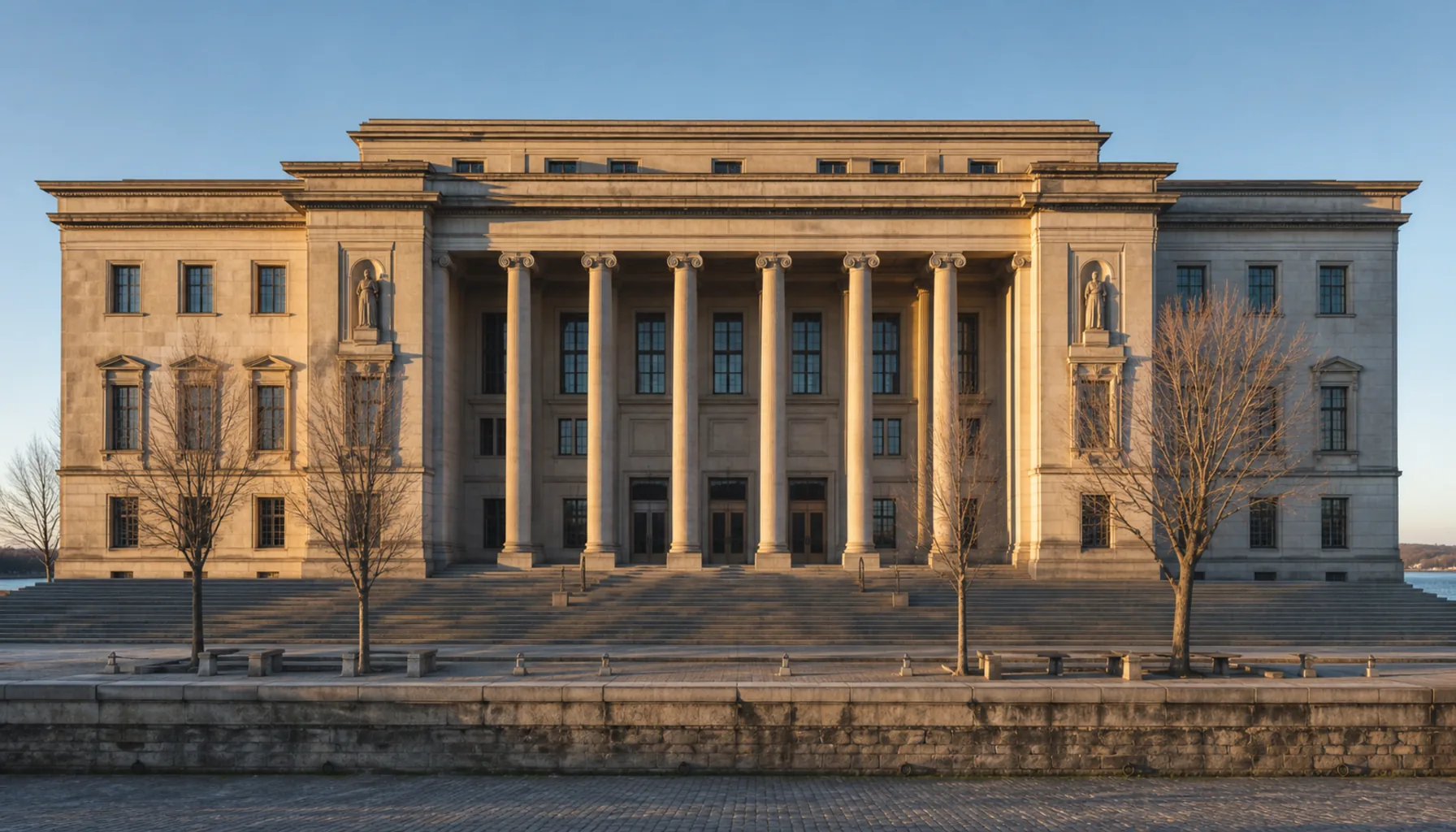
The Slovak National Museum building on the Danube embankment in BratislavaBudova Slovenského národného múzea na dunajskom nábreží v Bratislave
The Slovak National MuseumSlovenské národné múzeum
The national museum is an umbrella over roughly twenty specialist museums rather than a building. Its oldest root is the Slovak Museum Society founded at Martin in 1893, in years when a national collection could only be assembled privately; the museum house the society raised there before the First World War still holds the ethnographic collection, and the Museum of the Slovak Village stands on the hillside above the town.Národné múzeum nie je budova, ale strecha nad zhruba dvadsiatimi špecializovanými múzeami. Jeho najstarším koreňom je Muzeálna slovenská spoločnosť založená v Martine v roku 1893, v časoch, keď sa národná zbierka dala budovať len súkromne; budova múzea, ktorú spoločnosť v meste postavila pred prvou svetovou vojnou, dodnes uchováva národopisnú zbierku a nad mestom stojí na svahu Múzeum slovenskej dediny.
In Bratislava the institution occupies several buildings at once: the natural history museum on the Danube embankment, the historical museum and the music museum inside Bratislava Castle, and the archaeological museum in the old town. They are ticketed separately and keep their own hours, which surprises visitors who expect one entrance.V Bratislave zaberá inštitúcia hneď niekoľko budov: prírodovedné múzeum na dunajskom nábreží, historické a hudobné múzeum v Bratislavskom hrade a archeologické múzeum v starom meste. Vstupné sa platí zvlášť a každé má vlastné otváracie hodiny, čo prekvapí návštevníkov, ktorí čakajú jeden vchod.
The reach beyond the capital is the point. Bojnice Castle and the manor at Betliar are museums of the national institution rather than of their towns, and so is the Spiš Museum at Levoča, which administers Spiš Castle on the hill above it. A ticket bought at any of them is a ticket to a branch of the same organisation.Podstatný je však dosah mimo hlavného mesta. Bojnický zámok aj kaštieľ v Betliari sú múzeami národnej inštitúcie, nie svojich miest, a rovnako je na tom Spišské múzeum v Levoči, ktoré spravuje Spišský hrad na kopci nad ním. Vstupenka kúpená v ktoromkoľvek z nich je vstupenkou do pobočky tej istej organizácie.
Museums of the minoritiesMúzeá menšín
One part of the national museum has no obvious counterpart in the neighbouring countries: a set of museums for the cultures that share this one. Hungarian and Carpathian German culture are covered from Bratislava, Croatian from Devínska Nová Ves, Rusyn culture from Prešov, and Ukrainian culture from Svidník, where the museum also runs the open-air village on the hillside by the festival amphitheatre.Jedna časť národného múzea nemá v susedných krajinách zrejmú obdobu: sústava múzeí kultúr, ktoré túto krajinu spoluvytvárajú. Kultúru Maďarov a karpatských Nemcov spracúva Bratislava, chorvátsku Devínska Nová Ves, rusínsku Prešov a ukrajinskú Svidník, kde múzeum spravuje aj skanzen na svahu pri festivalovom amfiteátri.
These are working museums with their own collections, exhibitions and publications, not display cases added to somebody else's gallery. Several of them are the only institution of their kind, and their curators are usually the people the historians telephone.Sú to plnohodnotné múzeá s vlastnými zbierkami, výstavami a publikáciami, nie vitríny pridané do cudzej expozície. Niektoré z nich sú jedinou inštitúciou svojho druhu a ich kurátori bývajú tí, ktorým telefonujú historici.
The Slovak National GallerySlovenská národná galéria
Founded in 1948, the gallery took the Water Barracks on the Danube embankment — an eighteenth-century block built at the water's edge — and the Esterházy Palace next to it. In the 1970s Vladimír Dedeček bridged the courtyard with a raised concrete wing that has divided Slovak opinion ever since. The complex then closed for a reconstruction that ran for two decades and reopened in 2022.Galéria vznikla v roku 1948 a zaujala Vodné kasárne na dunajskom nábreží — stavbu z 18. storočia postavenú priamo pri vode — a susedný Esterházyho palác. V sedemdesiatych rokoch preklenul Vladimír Dedeček nádvorie vyvýšeným betónovým krídlom, ktoré slovenskú verejnosť delí dodnes. Areál sa potom zavrel na rekonštrukciu, ktorá trvala dve desaťročia, a znovu otvoril v roku 2022.
The collection runs from Gothic panel painting and carved altars taken in from parish churches, through Baroque and the nineteenth century, to the modernists of the interwar decades and the generations that worked under socialism and after it. For twentieth-century Slovak art there is nothing else on this scale.Zbierka siaha od gotickej tabuľovej maľby a rezbárskych oltárov prevzatých z farských kostolov cez barok a 19. storočie až po medzivojnovú modernu a generácie, ktoré tvorili počas socializmu a po ňom. Pre slovenské umenie 20. storočia nič porovnateľne rozsiahle inde nie je.
Four houses outside Bratislava belong to the same institution: the collection of older European art at Zvolen Castle, the manor at Strážky near Spišská Belá where Ladislav Mednyánszky painted, Schaubmar's Mill at Pezinok with the naive art, and the Ľudovít Fulla Gallery at Ružomberok, built around the works the painter gave to the state.Tej istej inštitúcii patria štyri domy mimo Bratislavy: zbierka staršieho európskeho umenia na Zvolenskom zámku, kaštieľ v Strážkach pri Spišskej Belej, kde maľoval Ladislav Mednyánszky, Schaubmarov mlyn v Pezinku s insitným umením a Galéria Ľudovíta Fullu v Ružomberku, postavená okolo diel, ktoré maliar daroval štátu.
The other collections in the capitalĎalšie zbierky v hlavnom meste
The city museum of Bratislava has its seat in the Old Town Hall on the Main Square and scatters the rest across the centre: arms in Michael's Gate, clocks in the narrow house at the Good Shepherd below the castle, viticulture and period interiors in Apponyi House. Two of its branches are outside the old town — the Roman fort of Gerulata at Rusovce, part of the Danube frontier inscribed by UNESCO, and Devín Castle above the confluence.Múzeum mesta Bratislavy sídli v Starej radnici na Hlavnom námestí a zvyšok má rozptýlený po centre: zbrane v Michalskej bráne, hodiny v úzkom Dome U dobrého pastiera pod hradom, vinohradníctvo a historické interiéry v Apponyiho paláci. Dve pobočky sú mimo starého mesta — rímska Gerulata v Rusovciach, súčasť dunajskej hranice zapísanej v UNESCO, a Devín nad sútokom.
The city gallery works from two palaces near the Main Square, the Mirbach and the Pálffy. Downstream at Čunovo, on a spit of land beside the Danube waterworks, Danubiana opened in 2000: a private museum of contemporary art with a sculpture park, water on three sides and the best-sited building of its kind in the country.Mestská galéria pracuje z dvoch palácov pri Hlavnom námestí — Mirbachovho a Pálffyho. Po prúde pri Čunove, na výbežku vedľa vodného diela, otvorili v roku 2000 Danubianu: súkromné múzeum súčasného umenia so sochárskym parkom, vodou z troch strán a najlepšie situovanou stavbou svojho druhu v krajine.