Slovakia · folklore festivalSlovensko · folklórny festival
Jánošíkove dni in TerchováJánošíkove dni v Terchovej
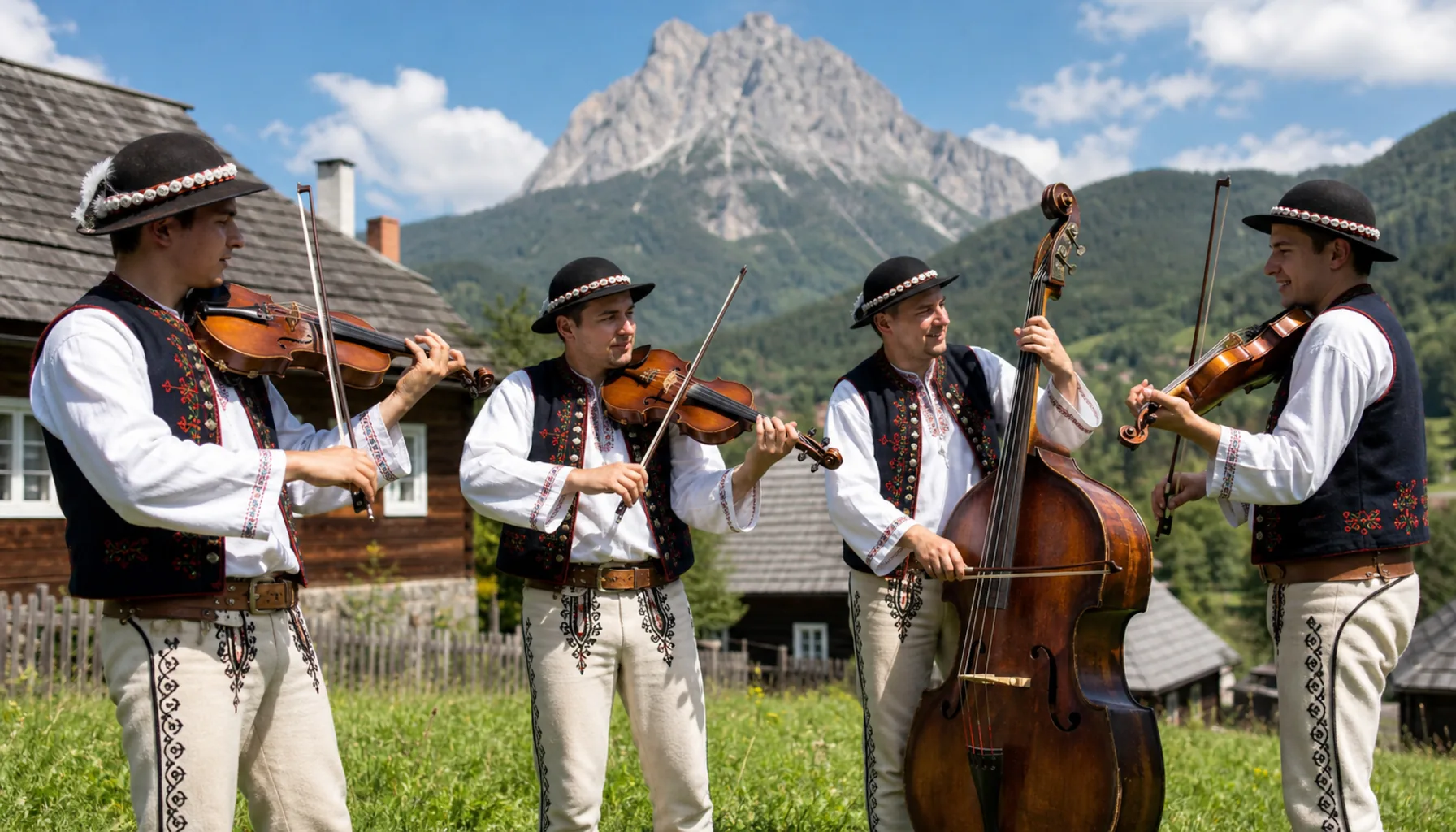
Every year at the turn of July and August, Terchová holds Jánošíkove dni — a folklore festival in the outlaw's own village, under the rock towers of the Malá Fatra, where the UNESCO-listed terchovská muzika is heard by the hour rather than as a sample.Každý rok na prelome júla a augusta sa v Terchovej konajú Jánošíkove dni — folklórny festival v rodnej obci zbojníka, pod skalnými vežami Malej Fatry, kde terchovskú muziku zapísanú v UNESCO počuť celé hodiny, nie iba na ukážku.
A Terchová string band playing outdoors under the Malá Fatra.Terchovská muzika hrá pod holým nebom pod Malou Fatrou.
A village that fills up for the weekendObec, ktorá sa na víkend zaplní
Jánošíkove dni fill Terchová at the turn of July and August. The main programmes run in the amphitheatre Nad bôrami above the village — roughly six thousand seats, with room for two thousand more under a tent — and the rest spills into the streets, where craftsmen work and smaller stages carry on late.Jánošíkove dni zaplnia Terchovú na prelome júla a augusta. Hlavné programy bežia v amfiteátri Nad bôrami nad obcou — zhruba šesťtisíc miest a ďalšie dve tisícky pod stanom — a zvyšok sa rozlieva do ulíc, kde pracujú remeselníci a menšie pódiá hrajú do noci.
The festival was first held in 1963, two hundred and fifty years after Jánošík's execution, and has had guests from abroad since 1991. Two things anchor the weekend: a horse-drawn wagon procession of costumed musicians, held since 1968, and a Sunday mass in the village church for the bearers of folk traditions.Prvý ročník sa konal v roku 1963, dvestopäťdesiat rokov po Jánošíkovej poprave, a od roku 1991 na festival chodia hostia zo zahraničia. Víkend držia dve veci: konský vozový sprievod krojovaných muzikantov, ktorý sa koná od roku 1968, a nedeľná svätá omša za nositeľov ľudových tradícií v kostole v obci.
Why Jánošík is Terchová'sPrečo je Jánošík terchovský
Juraj Jánošík was born here in 1688. He served as a soldier, spent perhaps two years robbing on the roads with a small band, and was tried and executed at Liptovský Mikuláš in 1713, at twenty-five. The facts are thin, and unremarkable for the period.Juraj Jánošík sa tu narodil v roku 1688. Slúžil ako vojak, azda dva roky zbíjal s malou družinou na cestách a v roku 1713 ho v Liptovskom Mikuláši odsúdili a popravili, vo veku dvadsaťpäť rokov. Faktov je málo a na tú dobu nie sú ničím výnimočné.
What was made of him afterwards is the reason for the festival. Ballads, then plays and films, turned an executed robber into the standard Slovak hero of the poor. Ján Kulich's stainless-steel figure now stands on the hill above the village, axe and hat and all.Dôvodom festivalu je to, čo z neho urobili neskôr. Balady, potom hry a filmy premenili popraveného zbojníka na typického slovenského hrdinu chudobných. Na kopci nad obcou dnes stojí postava Jána Kulicha z nehrdzavejúcej ocele, aj s valaškou a klobúkom.
The music the village keptHudba, ktorú si obec udržala
Terchovská muzika is a small string band — three to five players, with a little two-string bass or a diatonic button accordion holding the bottom — and above it a many-voiced singing that is the point of the whole thing. Shepherds' fifes are played solo in the same tradition.Terchovská muzika je malá sláčiková zostava — traja až piati hráči, spodok drží malá dvojstrunová basička alebo heligónka — a nad ňou viachlasný spev, o ktorý tu vlastne ide. K tej istej tradícii patrí aj sólová hra na pastierskych píšťalách.
In 2013 it was inscribed on UNESCO's representative list of intangible cultural heritage, one of Slovakia's ten entries. The listing changed nothing about how it is learned: by ear, in families, from players who never wrote any of it down.V roku 2013 ju zapísali do reprezentatívneho zoznamu nehmotného kultúrneho dedičstva UNESCO; je to jeden z desiatich slovenských zápisov. Na spôsobe, akým sa učí, zápis nič nezmenil: sluchom, v rodinách, od hráčov, ktorí si ju nikdy nezapisovali.
Played all year, not only on stageHrá sa po celý rok, nielen na pódiu
More than twenty ensembles play in and around Terchová, and most of their work has nothing to do with the festival. The bands are hired for weddings, name days and anniversaries, they play at funerals, and in costume they accompany the singing at the Sunday mass.V Terchovej a okolí hrá vyše dvadsať muzík a väčšina ich práce s festivalom nesúvisí. Kapely si najímajú na svadby, meniny a výročia, hrajú na pohreboch a v krojoch sprevádzajú spev na nedeľnej svätej omši.
That is worth remembering on the festival weekend. The stage is where the music is easiest to hear, but it is not where it lives — which is why the tradition survived without anyone having to decide to revive it.Cez festivalový víkend je to dobré mať na pamäti. Na pódiu je muziku najľahšie počuť, ale nežije tam — a práve preto tradícia prežila bez toho, aby ju musel niekto oživovať.
Under RozsutecPod Rozsutcom
Terchová lies about twenty-five kilometres east of Žilina, strung for kilometres along the Varínka with hamlets climbing the terraces above it. Behind the village the Vrátna valley opens into the Malá Fatra National Park, and above it stands Veľký Rozsutec, the rock horn in the park's emblem.Terchová leží asi dvadsaťpäť kilometrov východne od Žiliny, roztiahnutá na kilometre pozdĺž Varínky, s osadami stúpajúcimi po terasách nad ňou. Za obcou sa do Národného parku Malá Fatra otvára Vrátna dolina a nad ňou stojí Veľký Rozsutec, skalný roh zo znaku parku.
Buses from Žilina run through Varín and on up the valley, and over the festival weekend they are the sensible way in: there is one road, the car parks are paid and finite, and the village is full. Walking in the valley is covered on the village page.Autobusy zo Žiliny idú cez Varín a ďalej hore dolinou a cez festivalový víkend sú rozumnejšou voľbou: cesta je jediná, parkoviská sú platené a kapacitne obmedzené a obec je plná. Túram v doline sa venuje stránka o obci.