A Lake Nobody Meant to MakeJazero, ktoré nikto nechcel
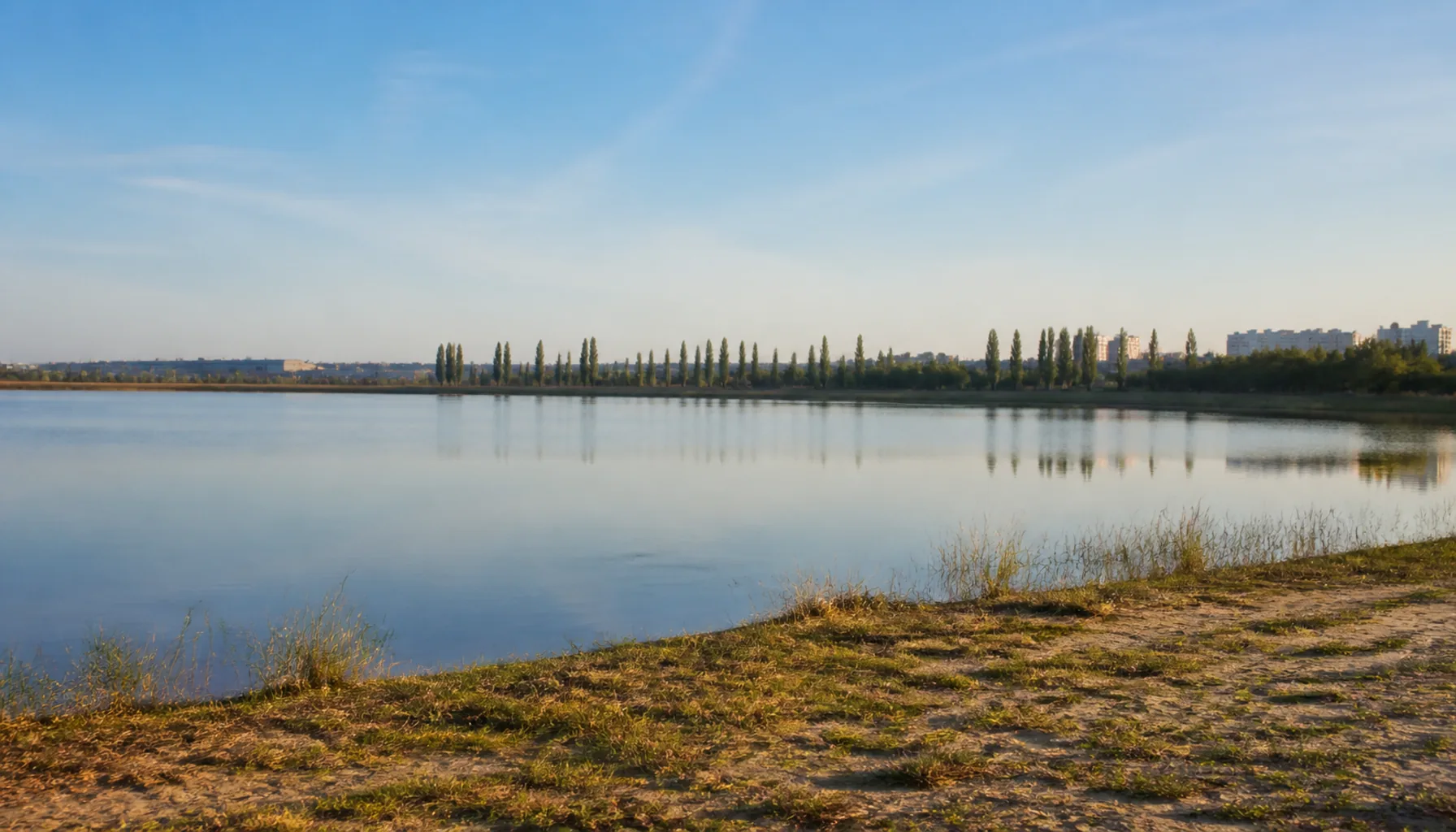
The story of this address begins with a hole. In the 1950s, as Bratislava was expanding fast and needed concrete, gravel was extracted on a large scale from the flat ground east of the city. When the diggers stopped, groundwater did the rest: the workings filled, and the result was an irregular sheet of water roughly a kilometre long and, in places, more than ten metres deep. The city had accidentally built itself a lake — and then, entirely deliberately, built a beach on it.Príbeh tejto adresy sa začína dierou. V päťdesiatych rokoch, keď Bratislava rýchlo rástla a potrebovala betón, sa na rovine východne od mesta ťažil štrk vo veľkom. Keď rýpadlá stíchli, zvyšok dorobila spodná voda: jamy sa zaplnili a výsledkom bola nepravidelná vodná plocha dlhá zhruba kilometer a miestami vyše desať metrov hlboká. Mesto si nechtiac postavilo jazero — a potom si na ňom celkom zámerne postavilo pláž.
By the second half of the twentieth century Zlaté piesky — “golden sands” — was an established summer institution: a municipal recreation area with beaches, boat hire, courts, a campsite and the tram running out to it from the middle of town. It is still run by the city's sports and recreation service today, which is why it feels like a public amenity rather than a resort. Generations of Bratislava childhoods happened here.V druhej polovici dvadsiateho storočia už boli Zlaté piesky zavedenou letnou inštitúciou: mestská rekreačná oblasť s plážami, požičovňou lodiek, ihriskami, kempingom a električkou, ktorá sem chodila z centra mesta. Spravuje ich dodnes mestská správa telovýchovných a rekreačných zariadení, a preto pôsobia ako verejná vymoženosť, nie ako rezort. Odohrali sa tu celé generácie bratislavských detstiev.
A gravel pit for the city's concrete became the city's beach. The shopping centre was the third thing to happen here, and by far the least surprising.Zo štrkoviska pre mestský betón sa stala mestská pláž. Obchodné centrum bolo tretie v poradí a zďaleka najmenej prekvapivé.
The centre came last, in November 2004, and the logic was simple: a trunk road with heavy traffic, cheap flat land, an existing tram terminus and a captive summer crowd already coming this way. Like almost every Slovak centre of that moment it was built around a hypermarket — the anchor that guarantees weekly footfall — with a gallery of smaller units attached to it. That is a formula rather than an ambition, and Shopping Palace has never pretended otherwise.Centrum prišlo ako posledné, v novembri 2004, a logika bola jednoduchá: výpadovka s hustou premávkou, lacná rovná pôda, existujúca konečná električky a stále prítomný letný dav, ktorý sem aj tak chodí. Ako takmer každé slovenské centrum tej doby bolo postavené okolo hypermarketu — kotvy, ktorá zaručuje týždennú návštevnosť — s pasážou menších prevádzok pripojenou k nemu. Je to formula, nie ambícia, a Shopping Palace nikdy netvrdil opak.