More than half of Slovak electricity comes from two nuclear stations, most of the rest from dams on the Danube and the Váh, and the country sits on the pipelines that used to carry most of Russia's gas into Europe.Viac než polovicu slovenskej elektriny vyrábajú dve jadrové elektrárne, väčšinu zvyšku priehrady na Dunaji a Váhu — a krajina leží na plynovodoch, ktorými kedysi prúdila do Európy väčšina ruského plynu.
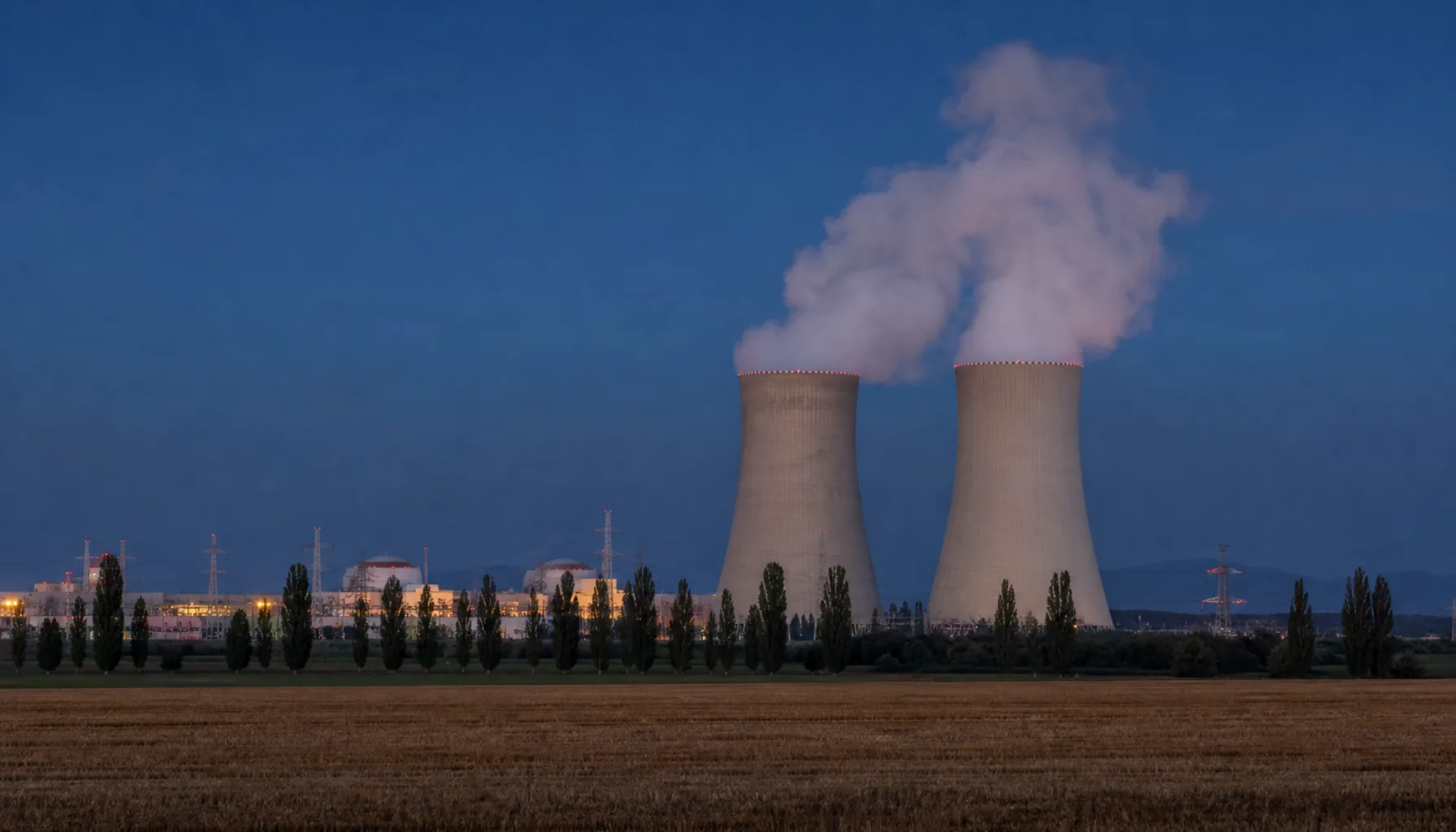
Cooling towers of the Mochovce nuclear station on the lowland horizonChladiace veže jadrovej elektrárne Mochovce na obzore nížiny
How big it isAké je to veľké
Slovakia generates roughly as much electricity as it consumes and is one of the most nuclear-dependent countries in the European Union by share of generation. Two stations carry that load: Jaslovské Bohunice in the west and Mochovce in the south, both running Soviet-designed VVER pressurised-water reactors that have been progressively upgraded.Slovensko vyrába približne toľko elektriny, koľko spotrebuje, a podielom jadra na výrobe patrí k najjadrovejším krajinám Európskej únie. Túto záťaž nesú dve elektrárne: Jaslovské Bohunice na západe a Mochovce na juhu, obe s tlakovodnými reaktormi typu VVER sovietskeho návrhu, ktoré postupne modernizovali.
The rest is mostly water. The Gabčíkovo barrage on the Danube is the single largest hydro plant, and a cascade of dams runs down the Váh from Liptov to the lowland, each one a reservoir that also does flood control and recreation. The pumped-storage plant on the Čierny Váh is the country's largest and exists to absorb the nuclear output that cannot be throttled down overnight.Zvyšok je väčšinou voda. Vodné dielo Gabčíkovo na Dunaji je najväčšou vodnou elektrárňou a po Váhu od Liptova do nížiny sa tiahne kaskáda priehrad, z ktorých každá slúži aj na ochranu pred povodňami a na rekreáciu. Prečerpávacia elektráreň na Čiernom Váhu je najväčšia v krajine a existuje preto, aby pohltila jadrový výkon, ktorý sa cez noc nedá stiahnuť.
Where it happensKde sa to deje
The nuclear sites are in the west and south because that is where the cooling water and the grid are. The hydro is where the rivers are — the Danube at Gabčíkovo, the Váh from Liptovská Mara down through Žilina and Považie to the plain.Jadrové lokality sú na západe a juhu, lebo tam je chladiaca voda a sieť. Vodné diela sú tam, kde sú rieky — Dunaj pri Gabčíkove, Váh od Liptovskej Mary cez Žilinu a Považie až do roviny.
Coal was the third leg and is being cut away. The Upper Nitra basin around Prievidza and Handlová mined lignite for the Nováky power station for generations, kept going in the end by a subsidy paid through electricity bills. That support was wound down, and the region has been running a transition programme ever since — the most concrete example in the country of what phasing out a fuel does to the town that produced it.Tretím pilierom bolo uhlie a to sa odbúrava. Hornonitrianska kotlina okolo Prievidze a Handlovej ťažila po generácie hnedé uhlie pre elektráreň Nováky a napokon ju držala pri živote dotácia platená v cene elektriny. Podporu ukončili a región odvtedy beží na transformačnom programe — najkonkrétnejší príklad v krajine, čo útlm paliva urobí s mestom, ktoré ho ťažilo.
The gas transit network crosses the country west to east and made Slovakia, for decades, one of the most important transit states in Europe. Flows through Ukraine ended at the start of 2025, and the pipeline system now works mainly on gas arriving from the west and south — a reversal of direction that took thirty years of infrastructure and about thirty months of politics.Tranzitná plynovodná sústava križuje krajinu zo západu na východ a po desaťročia robila zo Slovenska jeden z najdôležitejších tranzitných štátov Európy. Toky cez Ukrajinu sa skončili začiatkom roka 2025 a sústava dnes pracuje najmä s plynom prichádzajúcim zo západu a juhu — obrátenie smeru, ktoré si vyžiadalo tridsať rokov infraštruktúry a asi tridsať mesiacov politiky.
Who does itKto to robí
Slovenské elektrárne owns and runs the nuclear and most of the large hydro. The transmission grid is operated separately by the state transmission company, and gas transit by the pipeline operator — an unbundled structure the European market rules require.Slovenské elektrárne vlastnia a prevádzkujú jadrové elektrárne a väčšinu veľkých vodných diel. Prenosovú sústavu prevádzkuje samostatne štátna prenosová spoločnosť a tranzit plynu prepravca — oddelená štruktúra, ktorú vyžadujú európske pravidlá trhu.
Distribution is regional: three companies cover the west, the centre and the east, and their names are on the poles in every village. Heat is municipal — most Slovak towns have a district heating system, a legacy of the socialist period that turns out to be an asset when the question is how to decarbonise a block of flats.Distribúcia je regionálna: tri spoločnosti pokrývajú západ, stred a východ a ich názvy sú na stĺpoch v každej obci. Teplo je mestské — väčšina slovenských miest má centrálne zásobovanie teplom, dedičstvo socialistického obdobia, ktoré sa ukazuje ako výhoda, keď je otázkou, ako dekarbonizovať panelák.
What is changingČo sa mení
Mochovce's third unit entered service in 2023 after a construction history measured in decades, and a fourth is being completed. Renewables have grown from a very low base — rooftop solar, small hydro, biomass from the sawmills — but the terrain and the wind resource mean Slovakia will not be a wind country.Tretí blok Mochoviec začal pracovať v roku 2023 po výstavbe meranej na desaťročia a štvrtý sa dokončuje. Obnoviteľné zdroje rástli z veľmi nízkeho základu — strešné fotovoltaické panely, malé vodné elektrárne, biomasa z píl — ale terén a veterné podmienky znamenajú, že veternou krajinou sa Slovensko nestane.
The open questions are the ones every neighbouring country shares: what replaces coal-fired heat in the towns that still burn it, how much of the transit infrastructure keeps earning its keep, and how a grid built for a handful of very large machines absorbs a hundred thousand very small ones.Otvorené otázky sú tie isté ako u susedov: čím nahradiť uhoľné teplo v mestách, ktoré ho ešte pália, koľko z tranzitnej infraštruktúry sa ešte uživí a ako má sieť postavená pre hŕstku veľmi veľkých strojov pojať stotisíc veľmi malých.